e‑commerce agency specializing in the development of digital platforms and solutions.
Your e-commerce platform must support growth, streamline the shopping experience, and integrate seamlessly with your entire digital ecosystem.
DATASOLUTION supports brands, retailers, manufacturers, pure players, and merchants in the design, development, redesign, and optimization of high-performance, scalable, and connected e-commerce solutions.













E-commerce in France in 2025: Key Figures
Source: Key E-commerce Figures for 2026, FEVAD
What challenges do e-commerce businesses face?
Companies that consult with an agency specializing in e-commerce rarely have just one problem.
The issue is often broader: a platform that can no longer keep up with growth, a checkout process with low conversion rates, an architecture that’s too expensive to maintain, unstable ERP or PIM integrations, a website that slows down during peak sales periods, or a customer experience that no longer meets market expectations.
Warning signs are usually visible on the business side:
-
#01
Insufficient conversion rate despite qualified traffic.
-
#02
Purchasing process is too complex, especially on mobile devices or in B2B transactions.
-
#03
High technical debt, which slows down development and increases costs.
-
#04
Difficulty connecting business applications: ERP, CRM, PIM, DAM, OMS, WMS, PSP, and marketplaces.
-
#05
Lack of scalability during traffic peaks, sales campaigns, or international expansion.
-
#06
Fragmented omnichannel experience, with data, prices, inventory, or content that varies across channels.
-
#07
Time-to-market is too long to launch a new product, enter a new country, introduce a new route, or launch a new service.
A high-performance platform must therefore address several challenges at once: improving sales, loading quickly, remaining stable, facilitating business contributions, supporting sales teams, and aligning with the digital roadmap. E-commerce development isn’t limited to code: it involves UX, architecture, data, security, hosting, SEO, conversion, and day-to-day operations.
Solutions and services offered by DATASOLUTION
We support you throughout your e-commerce projects, from end to end—from strategic planning to ongoing operations. Our goal: to design an e-commerce platform tailored to your business model, your organization, your IT constraints, and your growth ambitions.
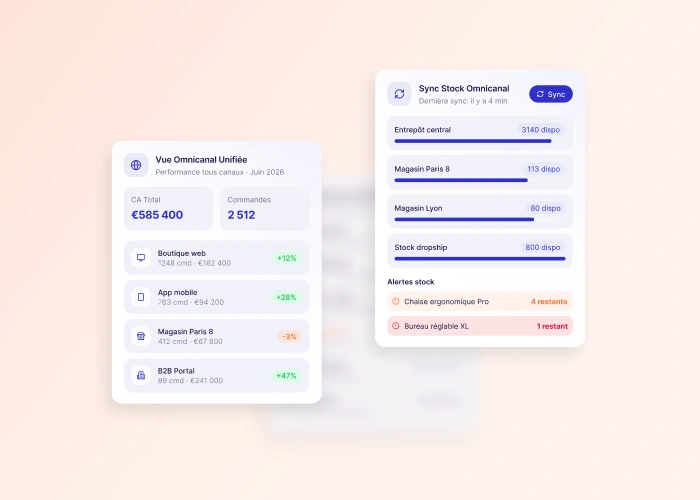
B2C & Omnichannel Website
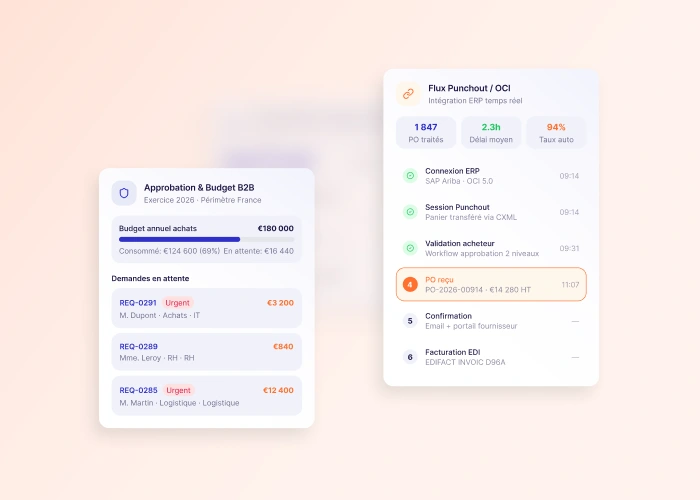
B2B Website & E-Procurement
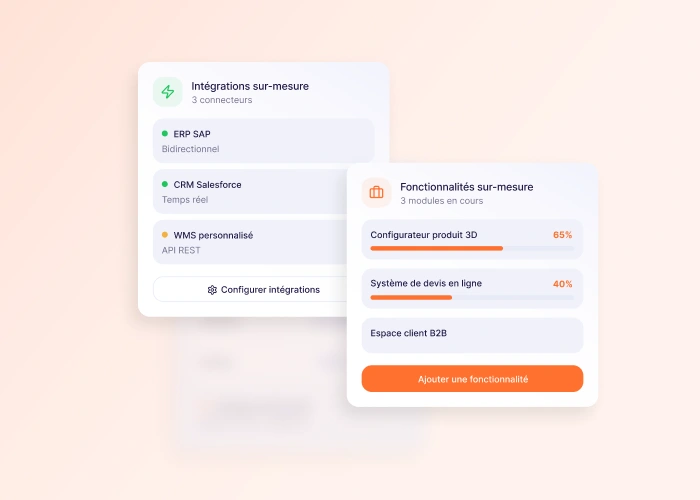
Custom E-commerce
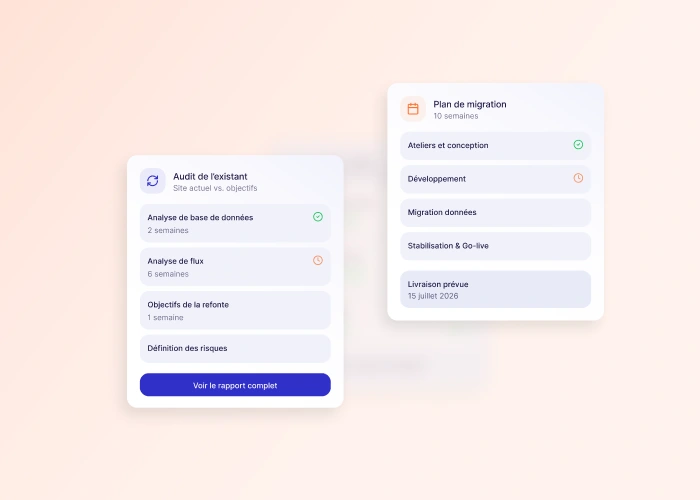
E-commerce site redesign
Why should you entrust your e-commerce project to DATASOLUTION?
Contact an e-commerce expertThe Methodological Approach
Scope: Define the Target E-Commerce Model
We align business objectives, KPIs, IT constraints, priority user journeys, volumes, business rules, and the timeline. This step allows us to choose a realistic path forward: creation, redesign, MVP, replatforming, optimization, or omnichannel expansion.
Design: Designing the Experience and Architecture
We are working on the user journeys,UX/UI, site structure, key templates, navigation rules, the purchase funnel, and technical architecture. The choice between an integrated platform, headless or composable platform depends on considerations of flexibility, performance, governance, and costs.
Build: Develop, Connect, Secure
Our teams are building the platform, developing the front ends, and back-end, integrate e-commerce solutions, connect business tools, and implement quality controls. The E-commerce development also covers testing, security, performance, accessibility, and maintainability.
Launch: Preparing for Production Deployment
Preparations for the go-live are underway: testing, data migration, redirect plan, load testing, traffic freeze, monitoring, rollback, business coordination, and communication. The goal is to minimize risks and ensure business continuity.
Run: Maintain and Improve
After launch, the platform must remain fast, stable, and scalable. We monitor metrics, prioritize optimizations, resolve issues, anticipate traffic spikes, and support new features.
Technologies & Partners
Our selection of partner solutions is based on our experience in e-commerce and digital technology. Our vendor-neutral approach allows us to identify and recommend the best solutions on the market.











Discover our e-commerce projects
See all our projects


















FAQ: Your Questions About E-Commerce
The choice depends on your sales model, sales volume, product catalog, IT integrations, international goals, team constraints, and budget. A scoping exercise allows you to compare options based on time-to-market, TCO, scalability, and maintainability.
B2C focuses primarily on the shopping experience, conversion, omnichannel strategies, and sales promotion. B2B often adds multi-user accounts, negotiated pricing, dedicated catalogs, recurring orders, quotes, approvals, and e-procurement integrations.
A platform overhaul becomes necessary when the platform begins to hinder growth: poor performance, technical debt, outdated UX, excessive maintenance costs, integration difficulties, functional limitations, or a decline in conversion rates.
No. These architectures are suitable for advanced requirements such as omnichannel capabilities, personalization, scalability, or frequent deployments. A more integrated platform may be a better fit when the requirements are standard, the budget is limited, or the team is small.
Start by measuring: Core Web Vitals, server time, front-end size, third-party scripts, internal search, checkout flow, mobile performance, and availability. Optimizations should then be prioritized based on their business impact, not just their technical score.
Contact an expert
Our experts will contact you within 72 hours!
Latest articles
Visit the blog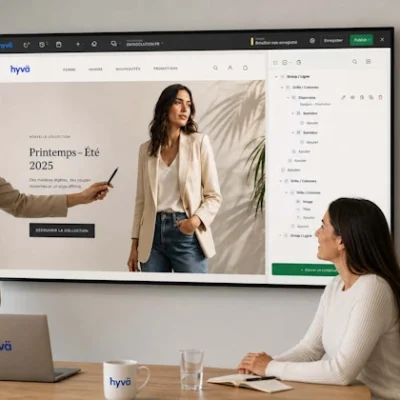
Content management on Magento: how to give marketing teams back control with Hyvä CMS
17/08/2026
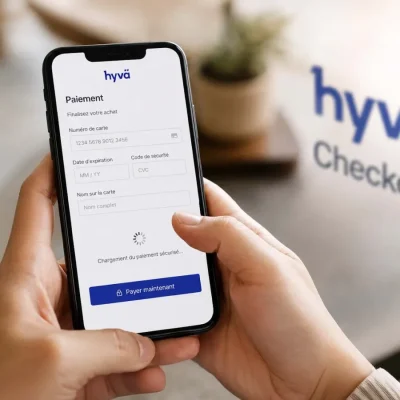
How Hyvä Checkout cuts load times and boosts conversions
11/08/2026

RAISE Summit Paris: 3 lessons on AI in the enterprise, from data to execution
23/07/2026
DATASOLUTION continues its external growth with the acquisition of Altimax
23/07/2026
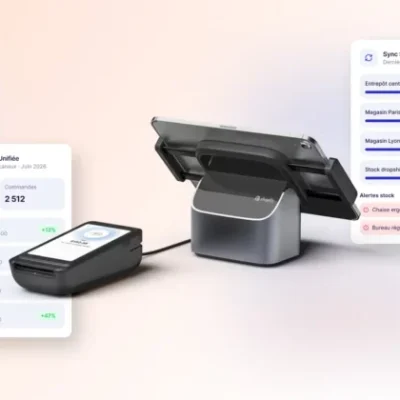
Shopify POS: Sync Your Brick-and-Mortar Stores and Your E-Commerce Site—Once and for All
17/07/2026