Cybersecurity audit for SMBs and large companies
An undetected vulnerability, an overly permissive configuration, uncontrolled access, or an overlooked critical dependency can compromise your entire information system. The cybersecurity audit allows you to take a step back and assess your level of exposure, identify real risks, and prioritize the necessary actions.
We help small and medium-sized businesses, mid-market companies, and large enterprises assess their IT security: architecture, applications, infrastructure, cloud, workstations, access, governance, and internal practices. The goal: to transform a technical assessment into a clear, actionable, and prioritized action plan.
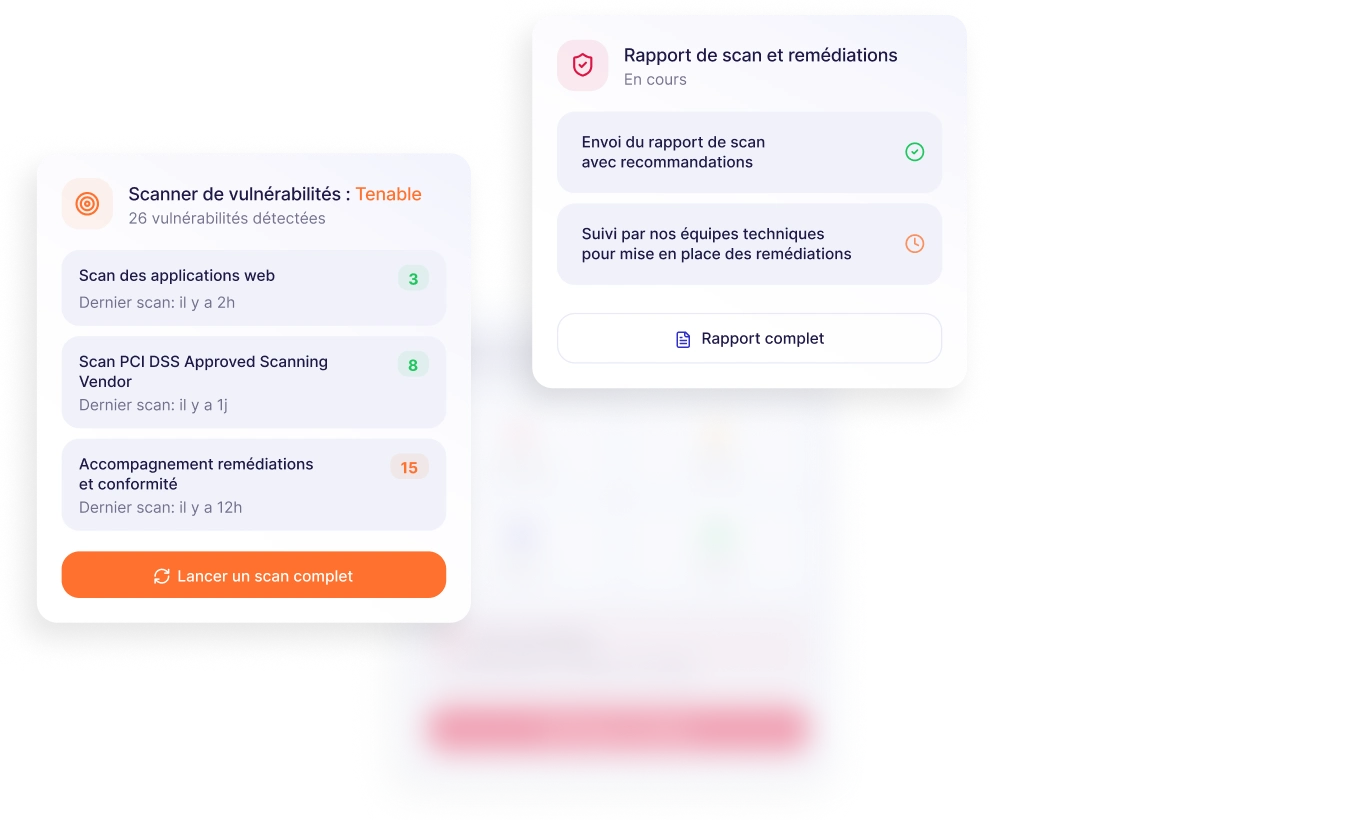
How do you conduct a cybersecurity audit?
A cybersecurity audit isn’t just about “finding vulnerabilities.” Above all, it helps identify where the most critical risks to the business lie: service interruptions, data theft, compromised accounts, ransomware, non-compliance, or poor access management.
Warning signs to watch for:
- Rapid growth of the information system without a comprehensive security review
- Cloud, SaaS, or line-of-business tools added gradually without a clear roadmap
- Too many administrator accounts or accounts that are not adequately controlled
- Recurring incidents: phishing, compromised accounts, antivirus alerts, network anomalies
- An application overhaul, a cloud migration, or expanding to new partners
- A customer, insurance, compliance, or executive requirement regarding the level of security
A corporate cybersecurity audit provides a concrete picture of the situation, moving beyond theoretical approaches. It helps distinguish critical issues from secondary optimizations.
Some statistics about cybersecurity
How to choose the right cybersecurity audit?
A successful audit depends first and foremost on your specific context. An SME without a dedicated security team will not have the same needs as a multi-site company with several critical applications.
For an cybersecurity audit for an SME, it’s best to focus on a pragmatic assessment: internet exposure, backups, email, user workstations, administrator privileges, the cloud, antivirus/EDR, and basic procedures.
This approach quickly provides an overview of the most tangible risks. For a more structured organization, the audit can go further: network segmentation, IAM review, application security, penetration testing, cloud audit, compliance, monitoring, and incident response capabilities.
Mistakes to avoid:
-
#01
Launching an audit without a clearly defined scope.
-
#02
Focusing solely on the technology and neglecting internal processes.
-
#03
Receiving a report that is too complex and difficult to translate into action.
-
#04
Treat all vulnerabilities with the same level of urgency.
-
#05
Do not plan for any follow-up after the handover.
A good audit should lead to a clear decision: what needs to be corrected, why, in what order, and with what level of effort.
What are the different types of cybersecurity audits?
Not all audits address the same need. The appropriate scope depends on your level of maturity, your business challenges, and your most critical assets.
-
This audit analyzes key components: network, servers, workstations, directory services, backups, configurations, user permissions, and external exposure. It highlights configuration vulnerabilities, sensitive access points, exposed services, and vulnerabilities that could facilitate an intrusion.
-
An application audit focuses on websites, portals, APIs, extranets, and line-of-business applications. It helps identify vulnerabilities related to code, forms, sessions, permissions, data flows, or technical dependencies.
-
For cloud environments, the analysis focuses on accounts, roles, permissions, backups, network policies, logging, and environment isolation. The goal is to ensure that the cloud’s flexibility does not create blind spots.
-
Cybersecurity also relies on processes: password management, access permissions, employee departures, backups, awareness training, incident management, and documentation. This audit assesses the company’s ability to prevent, detect, and respond.
Our cybersecurity audit services
Our cybersecurity audit services cover technical, organizational, and operational aspects. Each engagement results in prioritized findings, along with recommendations that are easy for IT, business, and executive teams to understand.
Request your audit-
We begin by identifying critical assets: applications, sensitive data, infrastructure, business tools, privileged accounts, cloud environments, and exposed services. This step helps avoid overly broad audits that yield little actionable insight.
-
We examine configurations, access, exposures, dependencies, internal practices, and potential weaknesses. Vulnerabilities are categorized based on their risk level, exploitability, and business impact.
-
The report is more than just a technical checklist. Each item is explained, put into context, and ranked by urgency. You’ll know what to fix first, what can be scheduled, and what falls under continuous improvement.
-
The audit concludes with a clear roadmap: immediate actions, structural initiatives, technical decisions, governance, awareness-raising, and controls to be implemented over time.
Our Cybersecurity Audit Methodology
Identifying Key Issues and Sensitive Assets
We coordinate the scope with your IT, business, and executive teams. Critical data, strategic applications, external access, and dependencies on service providers: every sensitive element is identified prior to the analysis.
Auditing with a Business Perspective
Technical audits are interpreted based on your actual usage. A vulnerability does not have the same impact depending on whether it affects a showcase website, a customer portal, an ERP system, or a sales database.
Present a clear, prioritized plan
The report distinguishes between critical risks, immediate actions, and long-term initiatives. It provides you with a clear overview to help you make decisions, allocate budgets, and organize corrective measures.
Supporting Operational Compliance
When appropriate, we assist teams with corrective actions, documentation, the implementation of best practices, and the monitoring of safety metrics.
FAQ : your questions about cybersecurity audit
The duration depends on the scope: the number of applications, the size of the information system, the expected level of detail, the areas to be audited, and the availability of the teams. A targeted audit can be conducted quickly, while a comprehensive audit requires a more thorough planning process.
A cybersecurity audit analyzes a broad scope: configurations, access, processes, exposure, governance, and risks. A penetration test seeks to actively exploit specific vulnerabilities within a defined scope. The two approaches are complementary.
Yes. An SME cybersecurity audit helps identify the most common risks: email, passwords, backups, cloud access, user workstations, business tools, and web exposure. The audit should be practical, prioritized, and tailored to the organization’s internal resources.
Contact an expert
Latest articles
Visit the blog
ChatGPT Ads on Shopify and HubSpot: What This Means for E-commerce Businesses and Marketing Teams in France
02/10/2026
Fine-tuning LLMs in the Enterprise: Better Than a Frontier Model?
28/09/2026

OroMomentum: AI for B2B efficiency
22/09/2026

AI: The 5 Top Stories of Summer 2026
17/09/2026

Content management on Magento: how to give marketing teams back control with Hyvä CMS
17/08/2026