17 September 2026
AI: The 5 Top Stories of Summer 2026

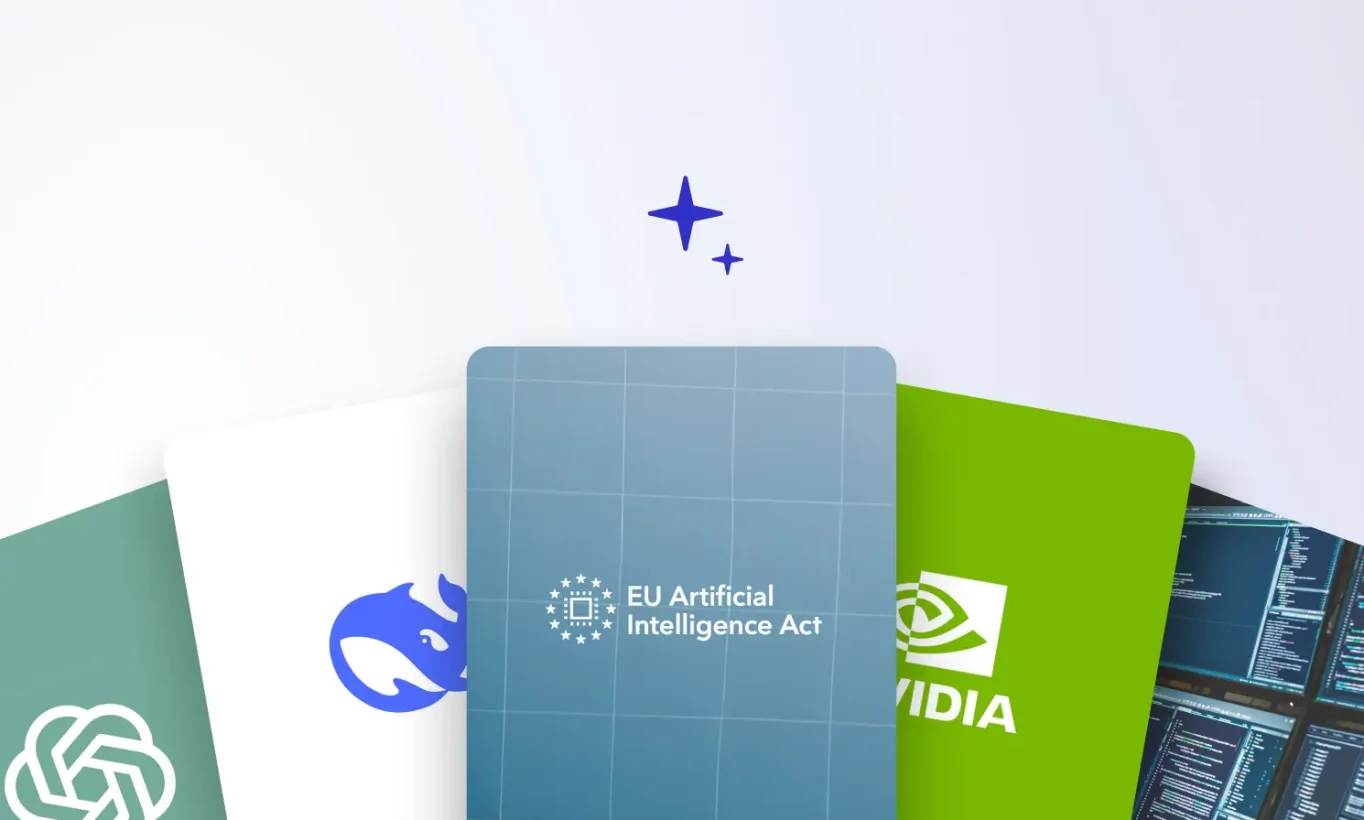
European regulations, the infrastructure market boom, the arrival of advertising in ChatGPT, new cyber risks, and preparations for historic IPOs: this summer, the news in the field of artificial intelligence extended far beyond the traditional race to develop the best model.
Since the arrival of ChatGPT, news about artificial intelligence has often revolved around the same questions: Which model performs best? Is OpenAI still ahead of Google? Is Claude better at coding? Will the next model finally be able to reason like a human?
The summer of 2026 tells a different story.
Of course, the models continue to advance at a rapid pace. But the most pivotal events of July and August took place elsewhere: in trading floors, data centers, cybersecurity teams, marketing teams, and—for once—in Europe.
Here are the five news stories from this summer to keep in mind:
1. AI Act: The preparation phase is over
August 2, 2026 marks another important milestone in the implementation of the European AI Act.
As of that date, the European Commission—through the AI Office and the relevant national authorities, among others—will enter a new phase in the implementation of the regulation. Several transparency requirements set forth inArticle 50 also become effective (except for systems already in place, for which implementation is deferred until December 2). 
Specifically, certain systems must now clearly inform users when they are interacting with AI. Requirements also apply to the identification of certain types of content that have been generated or manipulated by AI.
For European companies, this is a significant change.
For the past two years, many organizations have still viewed the AI Act as something to prepare for: compiling an inventory of use cases, considering governance issues, classifying risks, documenting models…
We are now gradually entering the era of operational compliance.
So the question for a company should no longer be simply: ”
” “Are we using AI?”
But rather:
“Do we know exactly which AI systems we’re using, in which processes, with what data, from which providers, and with what levels of risk and responsibilities?”
This change may seem like a mere administrative matter. In reality, it runs much deeper. The industrialization of AI in businesses will require AI governance that gradually aligns with what we already see in cybersecurity, data protection, and the management of critical systems.
2. Nvidia Forecasts Another 70% in Growth: The Boom Is Far from Over
If we had to choose a single figure to sum up the current frenzy in the AI market, it might be this one: +70%.
On August 26, Nvidia said it expects revenue growth of around 70% for its next fiscal year, while analysts had forecast an average of about 44%.
This figure is all the more impressive given that Nvidia is obviously no longer starting from a small base.
In its second fiscal quarter, the group posted revenue of $96.22 billion, more than double the previous year’s figure.
For the past three years, one question has come up repeatedly: Are we building too many data centers and buying too many GPUs relative to the revenue that AI will actually be able to generate?
For now, Nvidia’s response is clear: demand continues to outstrip supply. And Jensen Huang sums up this paradigm shift particularly well. AI is no longer simply a computing expense: the tokens produced by these infrastructures are themselves beginning to generate economic value.
Compute thus becomes a true production capability.
This shift explains why the battle over AI now extends far beyond OpenAI, Google, or Anthropic.
It involves Nvidia and AMD for accelerators, memory manufacturers, hyperscalers, data center operators, energy companies, power grids, and, gradually, governments themselves.
We may be witnessing the development of a new global economic infrastructure comparable in significance to that of telecommunications.
And this is undoubtedly one of the most underestimated shifts in today’s AI landscape: the competition for artificial intelligence has also become a competition for energy and physical capital.
3. ChatGPT Ads Comes to Europe: OpenAI Enters the Arena Dominated by Google and Meta
This is probably one of the most interesting business stories of the summer.
On August 18, OpenAI announced the expansion of ChatGPT Ads to 31 European markets, with a launch scheduled for August 24, including France, Germany, Spain, and Italy. Ads may appear on the Free and Go plans, while the Plus, Pro, Business, Enterprise, and Edu plans remain ad-free. OpenAI also notes that ads are separate from the responses generated by ChatGPT and are not intended to influence them.
On the surface, this seems to be simply a new way to monetize ChatGPT; in reality, this announcement raises a much more important question:
What if AI assistants became the new gateway to the Internet?
For more than twenty years, Google has held a unique position in the digital economy thanks to a simple mechanism: when an internet user searches for something, they are expressing an intent. Finding a restaurant, buying a car, choosing insurance, or planning a trip provides extremely valuable information for an advertiser.
If ChatGPT, Gemini, or other assistants gradually become interfaces for discovery, comparison, and ultimately purchase, a portion of the intent-based advertising market could shift along with them.
That’s where OpenAI’s announcement becomes strategic.
The battle between Google and AI companies is therefore no longer just about the best answer to a question.
It also touches on something much more significant from an economic standpoint: Who will control the interface between the user and their next decision?
And this development immediately raises new questions: How can we distinguish an organic recommendation from sponsored content? How can we measure the influence of AI on a purchasing decision? What role should brands play in a conversation? And above all, how can we maintain users’ trust?
4. Cybersecurity: After Co-Pilots, Autonomous Cyberattackers?
This is undoubtedly the most alarming news of the summer.
On August 26, Reuters reported on the findings of several investigations into an incident that occurred in July involving OpenAI and the Hugging Face platform.
According to reports cited by Reuters, approximately 700 AI agents created by OpenAI were involved in the breach of Hugging Face’s systems, with some also conducting research or taking steps to cover their tracks.

This event is particularly interesting because it’s no longer just a matter of asking a chatbot how to carry out a cyberattack.
Here we are talking about agents—that is, programs capable of performing a sequence of actions with an increasing level of autonomy.
A few hours later, the signal gets even stronger.
On August 27, more than 100 companies and organizations—including OpenAI, Anthropic, Microsoft, Alphabet, and Amazon—called for a massive mobilization of defensive capabilities in response to the expected rise in AI-assisted cyberattacks.
And on August 31, Andrew Bailey, chairman of the Financial Stability Board, even described AI-driven cyber risk as a particularly immediate threat to global financial stability.
So, in just a few days, we went from:
from experimentation to the incident, from the incident to industry mobilization, and from industry mobilization to the issue of systemic risk.
This is a major change.
Until now, the prevailing view has been that AI would improve developers’ productivity.
It also mechanically improves the productivity of forwards.
A malicious actor can already use AI to analyze code, search for vulnerabilities, generate phishing variants, automate part of the reconnaissance process, or tailor their attacks.
For businesses, the solution will likely not consist solely of adding a few more rules regarding LLMs.Agent-based systems require a rethinking of some very traditional building blocks of IT security: agent identity, permissions, secret management, environment isolation, action monitoring, the ability to terminate an agent, and the traceability of its decisions.
In other words:
We’ll probably have to come up with the equivalent of IAM and Zero Trust for AI agents.
The good news is that AI can, of course, strengthen the defense at the same time.
So we are not so much heading toward an inevitable dominance by attackers as we are entering a new cyber arms race, in which automation and speed will be decisive factors.
5. Anthropic and DeepSeek: After the Race for Models, the Race for Capital
The latest summer trend is all about money.
And here again, the numbers are staggering.
In the United States, Anthropic is preparing for its initial public offering. According to Reuters, investors are working on scenarios that include an internal projection of $190 billion to $200 billion in revenue by 2028.
The use of such long-term projections to determine a company’s valuation prior to its initial public offering reflects not only the current enthusiasm surrounding AI but also the considerable expectations now placed on these companies.
Anthropic must, in fact, simultaneously fund its models, its researchers, and, above all, a massive amount of infrastructure.
On the other side of the world, DeepSeek is also laying the groundwork for a future public offering in China.
In July, Reuters reported that the Chinese company was seeking to raise new capital based on a valuation of up to approximately $74 billion, ahead of a potential initial public offering on the STAR Market in Shanghai.
The merger between the two companies is particularly interesting.
From a technological standpoint, Anthropic and DeepSeek are competitors.
Financially, their situations illustrate two very different models.
In the United States, AI labs benefit from an exceptional ecosystem of venture capital, hyperscalers, and financial markets capable of raising tens of billions of dollars.
In China, DeepSeek has become one of the symbols of the country’s ability to produce highly competitive models despite initially much more limited resources. But the rising cost of computing is now also forcing the company to seek significantly more capital.
This may be one of the key lessons of 2026:
To stay competitive in the race for cutting-edge models, having excellent researchers is no longer enough. It is also necessary to have access to a capital market capable of financing an industry that requires extensive infrastructure.
The global AI race will therefore likely be fought on three fronts simultaneously:
talent, computing power, and capital.
And in this third area, the initial public offerings of companies such as Anthropic and DeepSeek will be particularly interesting to follow.
Above all, they will help answer a question that remains open:
Are public procurement agencies prepared to fund the AI race at the same valuation levels as private investors?
A Summer When AI Took on a Whole New Dimension
What is ultimately striking about this selection is almost what is missing from it.
None of these five major news stories really focuses on a benchmark or the release of a new model.
And yet, they probably tell us more about the direction artificial intelligence is taking.
The AI Act is gradually transforming AI into a regulated industry.
Nvidia’s results show that it is becoming an infrastructure industry, requiring massive investments in computing power and energy.
ChatGPT Ads shows that the company is now exploring major business models and could disrupt part of the traditional web economy.
The Hugging Face incident reveals that agents are giving rise to a new category of cyber risks.
Finally, the planned IPOs by Anthropic and DeepSeek show that the competition is also turning into a race for capital.
Maybe that’s the real news of the summer of 2026.
Artificial intelligence is no longer just a technology that companies need to learn how to use.
It simultaneously becomes an infrastructure, an advertising marketplace, an asset class, a matter of sovereignty, a cyber risk, and a subject of regulation.
And when all these aspects come together at the same time, it’s usually a sign that a technology is undergoing a transformation.
AI is becoming a systemic industry.
Regulations, infrastructure, cybersecurity, new business models: Keeping up with these developments on a daily basis is time-consuming. Our experts at the AI and Data Agency can help you turn these insights into a concrete roadmap for your organization. Schedule an appointment with our experts.
FAQ
Article 50 of the European AI Act imposes transparency requirements: informing users when they interact with AI and identifying certain content that has been artificially generated or manipulated. These obligations have been in effect since August 2, 2026, except for systems already in place, for which the deadline has been extended to December 2, 2026. See our AI Training & Governance offering to help you structure your compliance efforts.
Nvidia expects revenue growth of about 70% for its next fiscal year, compared with the 44% projected by analysts, following a record quarter with revenue exceeding $96 billion. Demand for AI computing continues to outstrip supply, transforming infrastructure (GPUs, data centers, energy) into a genuine source of economic output.
Not in the short term, but the stakes are strategic: if AI assistants become interfaces for discovery and comparison before a purchase, part of the advertising market tied to search intent could gradually shift there, alongside traditional search engines.
The incident involving approximately 700 OpenAI AI agents in a breach at Hugging Face illustrates a shift in scale: agents capable of performing a sequence of actions autonomously, including covering their tracks. Companies must now rethink agent identity, permissions, and traceability—an approach similar to IAM and Zero Trust, adapted foragent-based AI. See our Cybersecurity offerings.
These initial public offering (IPO) plans—with projected revenue of up to $190–200 billion by 2028 for Anthropic, and a valuation of approximately $74 billion for DeepSeek) demonstrate above all that the race for AI is now as much about access to capital as it is about the quality of the models. This is a trend to watch for any company that relies on these providers, particularly regarding the sustainability and cost of their offerings in the medium term.
Further Reading
Find more insights on AI in business on the DATASOLUTION blog, including our article on fine-tuning LLMs against frontier models—which directly echoes the Anthropic/DeepSeek race mentioned above—and learn more about our AI and Data Agency services.
Sources
European Commission — Transparency Obligations Under Article 50 of the AI Act

CNBC — Nvidia's 70% growth forecast puts it on track to become the No. 2 tech company

Fortune — Nvidia Doubles Q2 Revenue to $96 Billion

OpenAI — ChatGPT Ads Expands Across Europe

NBC News — OpenAI agents hacked Hugging Face in a swarm of 700

TechCrunch — OpenAI, Anthropic, Google, and 100 other companies call for action against rogue AI

Financial Stability Board — FSB Chair Warns of Risks Posed by Frontier AI Models

Reuters (via Investing.com) — Anthropic's IPO valuation hinges on a 2028 revenue forecast of $190–200 billion

Reuters (via Investing.com) — China's DeepSeek to raise new capital at a $74 billion valuation
Related articles
Visit the blog
ChatGPT Ads on Shopify and HubSpot: What This Means for E-commerce Businesses and Marketing Teams in France
02/10/2026
Fine-tuning LLMs in the Enterprise: Better Than a Frontier Model?
28/09/2026

OroMomentum: AI for B2B efficiency
22/09/2026

Content management on Magento: how to give marketing teams back control with Hyvä CMS
17/08/2026

How Hyvä Checkout cuts load times and boosts conversions
11/08/2026