4 February 2025
Why is the synergy between SEO and SEA more important than ever?

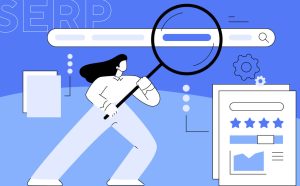
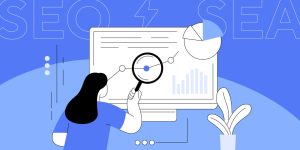 Long viewed as distinct—or even competing—channels, SEO and SEA are often managed independently of one another. However, there are numerous synergies between these two channels, and the rollout of Google Gemini is expected to further increase their interdependence. Leveraging the complementary nature of these two strategies should not only improve your ROI but also help you spend your Google Ads budget more effectively.
Improving the Keyword Strategy
The first obvious area of synergy: keywords.
Both SEA and SEO strategies respond to a user’s search query, and their goal is the same: to appear as high as possible in search engine results to attract visitors. However, failing to compare SEO and SEA keyword analyses could cause you to miss out on opportunities.
Which keywords perform well organically, and, conversely, which ones are poorly positioned?
Depending on the situation, it may be worth investing more effort in search campaigns targeting keywords for which you rank poorly. Conversely, you can scale back your advertising efforts for keywords where you rank well, especially if you trigger one of the SERP features.
A cross-analysis of keywords can also inspire you to come up with search terms to include in your campaigns or, conversely, to create content around keywords that drive conversions on Google Ads but don’t rank well in SEO.
Leveraging the synergy between SEO and SEA means taking advantage of the opportunity to use data from both channels regarding your keywords and adapting your strategies accordingly. It’s an effective way to avoid investing in campaigns that might end up costing you for a visit you would have received through organic search—and, conversely, to drive traffic from keywords where you’re poorly ranked.
Maximize SERP Coverage
One of the main goals of SEO is to secure a high ranking on the highly coveted SERP (Search Engine Results Page).
Having evolved over the years, SERP now features a wide range of content that captures the attention of internet users, making them more likely to visit your site. Knowledge graphs, images, videos, shopping banners, related questions, and location information for retailers with physical stores…
Then there are the famous Featured Snippets—that website excerpt in position zero that’s supposed to answer the user’s question. These top rankings guarantee you a high number of visits, since users don’t necessarily look any further for the answer to their question.
However, the top of the SERP also features paid results, such as ads or products in the shopping banner. Once you’ve identified your loss leaders, it may be worth ensuring that both your organic AND paid content appears at the top of the results page to maximize the conversion of Google search queries into sales of these products.
Content That Grows
SEA and SEO experts have been observing this for years: Google is pushing for automation.
This is a very strong trend on Google Ads, where ad managers have less control over ad elements and ad placements; the upcoming launch of AI Overview is expected to amplify this phenomenon.
This revolution has been in the works for nearly a year; while its implementation in Europe has been delayed—primarily due to the GDPR—it will offer internet users not just an excerpt from a single site that appears to best match their query, but an excerpt compiled from multiple sites.
The introduction of AI Overview is therefore expected to lead to a decline in traffic from the SEO channel.
In addition, organic content can now serve as the foundation for Google Ads campaigns using the DSA format.
Highly recommended by Google, which encourages running this type of campaign alongside traditional generic search campaigns, DSA creates a sponsored ad based on the website’s content. The purpose of this type of campaign is to ensure that no opportunities are missed and to identify search terms that drive conversions. However, to run effective DSA campaigns, the website must offer rich content.
Analyze these two factors in relation to one another
Digital acquisition is an ongoing testing process. We can’t rest on our laurels, since algorithms are constantly evolving.
One of the classic mistakes is to analyze each strategy independently of the others, even though there are strong synergies between SEA and SEO.
In particular, search engine rankings. If your organic content is performing well and you decide to reduce your media spending, you need to ensure that you continue to perform well for that search query in order to validate this strategic decision.
Similarly, strong performance in a search campaign doesn’t necessarily mean that more people are searching for the keywords you’re buying… but perhaps your organic content related to those keywords has dropped in rankings, and paid search is making up for that loss in ranking.
Since advertisers often manage these two channels through agencies that do not communicate with one another, the lack of transparency in their strategies prevents them from gaining an accurate picture of the situation and, therefore, from being able to suggest relevant optimizations.
Analyzing these two factors in conjunction also allows for greater flexibility in the acquisition strategy.
Since Google regularly updates its algorithms, one of these factors may experience a sudden decline or, conversely, an improvement. Being able to respond by increasing or decreasing investments can help limit a decline in conversions or, conversely, lower the cost of acquisition.
Conclusion: Learn how to balance these two factors so you aren’t penalized by algorithm changes.
By leveraging these two strategies in tandem, you will be able to:
- Gain relevant insights for your paid and SEO strategies
- Work Smart on Your Content Creation
- Increase your conversion rates and lower your customer acquisition cost
- Ensure that you have good visibility among users searching in your field
But above all, leveraging these two strategies in tandem will help you become less vulnerable to changes in Google’s algorithms—particularly the imminent launch of AI Overview, which is expected to impact traffic from organic search. By examining these two levers in conjunction, you’ll be able to understand improvements or declines in performance and adjust your strategy accordingly.
Do you have an idea or a project?
Related articles
Visit the blog
ChatGPT Ads on Shopify and HubSpot: What This Means for E-commerce Businesses and Marketing Teams in France
02/10/2026
Fine-tuning LLMs in the Enterprise: Better Than a Frontier Model?
28/09/2026

OroMomentum: AI for B2B efficiency
22/09/2026
AI: The 5 Top Stories of Summer 2026
17/09/2026
Content management on Magento: how to give marketing teams back control with Hyvä CMS
17/08/2026