28 January 2026
Universal Commerce Protocol (UCP): Google ushers in the age of agentic commerce with AI
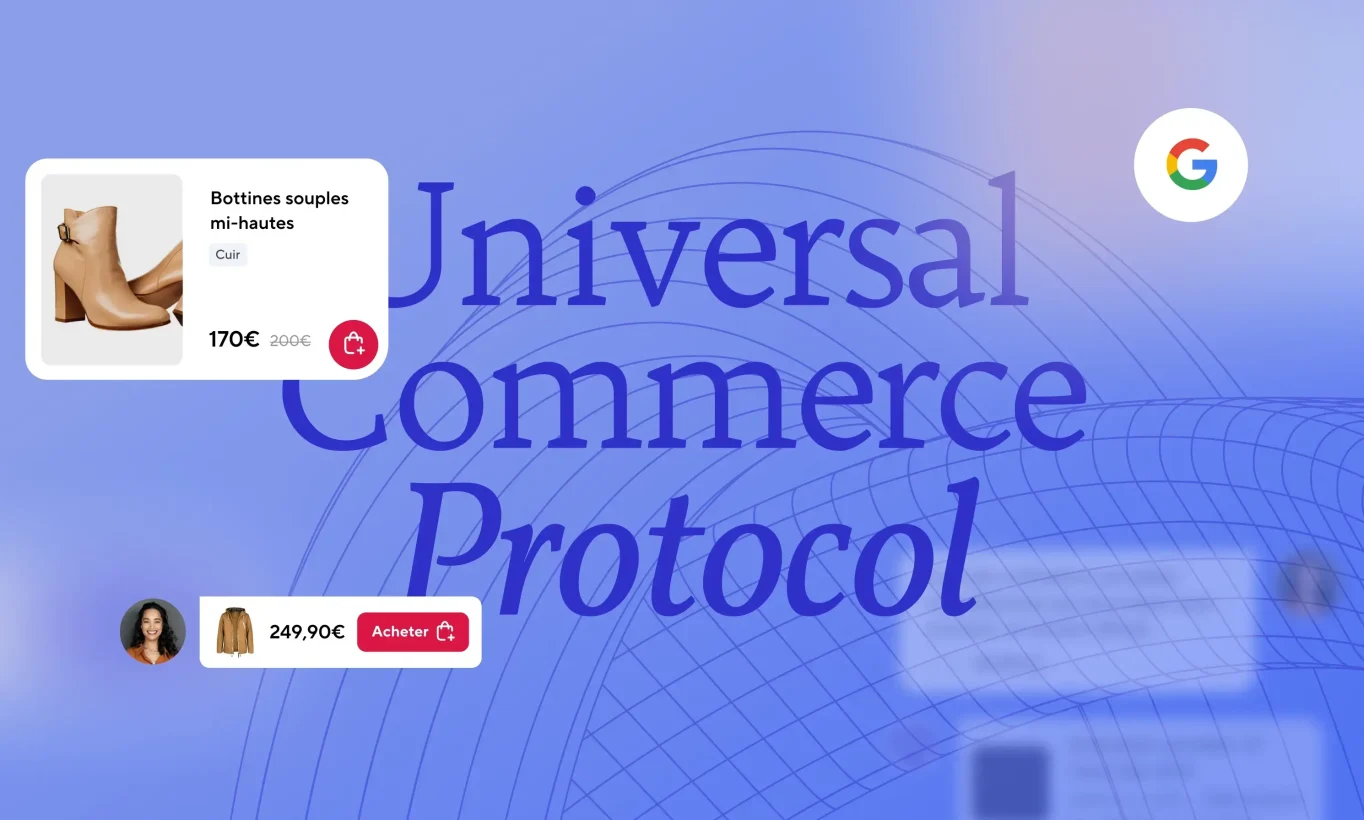
 E-commerce is no exception to theartificial intelligence revolution.
Following online search, it’s now shopping’s turn to enter the era of agent-based commerce, where AI agents can assist consumers from start to finish.
Google intends to shape this transition: in a blog post dated January 11, 2026, the company announced the launch of the Universal Commerce Protocol (UCP), a new open standard to unify AI-driven commerce.
This protocol is accompanied by several new features integrating Google Ads, Google Search (AI mode), and Merchant Center.
The New UCP Standard for AI-Driven E-Commerce
With UCP, Google is laying the groundwork for a common language for AI-driven e-commerce. Rather than creating numerous specific integrations between each assistant and each merchant, the protocol allows all stakeholders to communicate through a shared technical framework.
- The UCP is designed to work across all sectors (retail, travel, services, etc.) and is based on existing standards. It remains compatible with:
- Agent2Agent (A2A) for Communication Between Agents
- Agent Payments Protocol (AP2) for Secure Payments
- Model Context Protocol (MCP) for managing conversational context.
Presented as an open and extensible standard, the protocol was co-developed with major players in e-commerce and payments (Shopify, Walmart, Stripe, Visa, Mastercard, etc.). The goal is clear: to promote widespread adoption and prevent the fragmentation of solutions.
Key point for merchants: Google emphasizes that retailers remain the “Merchant of Record.” Even if the transaction takes place through an AI agent, the merchant retains the customer relationship, order management, and its business rules. The protocol is described as non-custodial: Google provides the infrastructure without taking ownership of the customer base.
From a technical standpoint, the UCP is based on proven web standards (REST, JSON, OAuth 2.0). It defines essential functional blocks such as checkout, customer identity linking, and order management. A merchant publishes a UCP profile describing the services it offers, which allows AI agents to dynamically discover its capabilities. The goal is to move from a model of multiple integrations to a simple one: publish once, interact everywhere.
Google's Vision for AI and Agent-Based Commerce
Why is Google investing so much in this protocol?
Because agent-based commerce represents a profound paradigm shift. As Sundar Pichai (Google’s CEO), we’re gradually moving from keywords to natural conversations.
Rather than manually comparing products and navigating between multiple websites, users formulate a request in natural language. An AI agent then takes care of searching for relevant options, answering questions, comparing offers… and can even complete the purchase.
Humans are now involved only to validate.
This scenario, long viewed as futuristic, is becoming a reality thanks to advances in generative AI and assistants like Google Gemini. For Google, the UCP is the missing link that connects these agents to the existing e-commerce infrastructure.
There is also a strategic stake at play. Faced with Amazon, which is developing its own virtual assistants, as well as OpenAI and Microsoft, Google is seeking to remain the central gateway to e-commerce. By focusing on an open standard rather than a proprietary solution, Google hopes to unite the ecosystem around its vision.
This trend, however, raises some major questions: If purchasing decisions are made directly within AI, what role will remain for e-commerce sites and organic traffic?
Google says it wants to maintain an “open” marketplace, but brands will have to accept that the conversion process is shifting upstream, into the conversational interface.
In return, AI promises smoother user journeys and potentially higher conversion rates.
Integration of native payment to make purchases without leaving Google
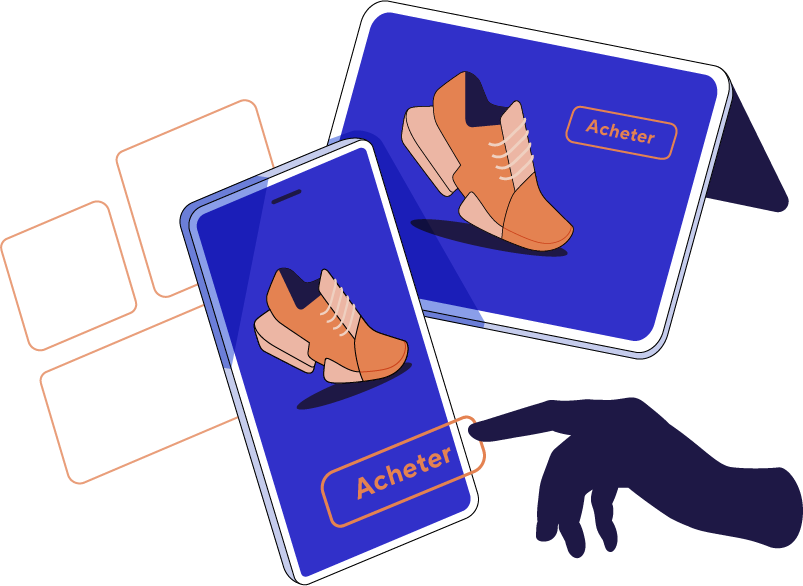
The first practical use case for UCP: integrated native payment. When a user views a product through a Google AI interface (AI-powered Search, Gemini app), they can complete their purchase directly on Google.
A “Buy” button opens a streamlined checkout process. The buyer no longer needs to visit the merchant’s website or re-enter their information: Google Pay uses the data already stored in the Wallet. The goal is to drastically reduce friction and shopping cart abandonment.
Merchants remain the official sellers: inventory, shipping, and customer service remain under their control. Payments are backed by high security standards, and PayPal will complement Google Pay. For now, this feature is being rolled out in the United States, with a gradual international expansion planned.

Google Search will include a branded “Business Agent”
Another major announcement: the Business Agent, a brand-customized chatbot integrated directly into Google Search. It functions as a virtual salesperson capable of answering questions, recommending products, and guiding customers toward the best option.
For example, a search for a suitcase might bring up a chat window under the brand’s name, answering questions about dimensions, materials, or availability. Merchants can customize this agent through Merchant Center—including messages, tone, and visual identity.
First rolled out in the United States, Business Agent could become a new channel for engagement and conversion, while allowing brands to maintain a direct connection with their customers in a world increasingly mediated by AI.
Merchant Center and Google Ads Are Evolving to Leverage Data for AI
To support these agents, Google is updating Merchant Center with new product attributes designed for conversational commerce. Beyond titles and descriptions, merchants are encouraged to provide more detailed information: product FAQs, compatibility details, alternatives, accessories, and warranties.
This data enables the AI to answer users’ questions accurately, without any approximations. Eventually, the quality and richness of the generated content could become a key factor in the visibility of the AI agents’ responses.
Paid paid acquisition via Google Ads, Google is introducing Direct Offers: promotions displayed directly within AI-generated responses when the user is close to making a purchase. These offers, configured through Google Ads, help drive conversions at the most opportune moment, while also presenting new challenges for margin management.
With the Universal Commerce Protocol, Google isn’t just adding another feature. It’s laying the groundwork for a new e-commerce ecosystem, where AI becomes a central intermediary between brands and consumers.
Integrated payments, brand agents, enriched product data, conversational advertising: everything is converging toward a more seamless shopping experience—but one that also places greater demands on data structuring.
For businesses, the message is clear: preparing now for this shift toward agent-based systems will help them maintain visibility and competitiveness as AI establishes itself as a new gateway to e-commerce.
Frequently Asked Questions About the UCP
The Universal Commerce Protocol is an open standard from Google that enables AI agents, e-commerce platforms, and payment systems to communicate through a common framework.
It facilitates sales through chatbots, while allowing merchants to manage orders, customers, and payments.
No. It adds a new sales channel through AI, without eliminating the role of the e-commerce site.
The rollout has begun in the United States. It is expected to be rolled out in Europe gradually, though no official date has been set at this time.
Related articles
Visit the blog
ChatGPT Ads on Shopify and HubSpot: What This Means for E-commerce Businesses and Marketing Teams in France
02/10/2026
Fine-tuning LLMs in the Enterprise: Better Than a Frontier Model?
28/09/2026

OroMomentum: AI for B2B efficiency
22/09/2026
AI: The 5 Top Stories of Summer 2026
17/09/2026
Content management on Magento: how to give marketing teams back control with Hyvä CMS
17/08/2026