15 November 2022
The 7 Shopify Updates You Can’t Miss in November 2022
#Shopify #news #eCommerce #features #what’s new
The new features keep coming for Shopify in November, with the company having unveiled numerous features over the past few weeks. Check them out in this article.

Here is an overview of the various updates made to the product, all with the goal of helping brands sell more effectively online.
This month, Shopify is introducing new features in the following areas:
- Checkout Extensions
- From the Post-Purchase Page
- Advanced Analytics with Visitor Cohorts
- Setting the focal point in images
- Custom Fields in the Front Office
- Shopify Tax for Selling in the U.S.
- Tap to Pay for Shopify POS
#1 – Checkout Extensibility
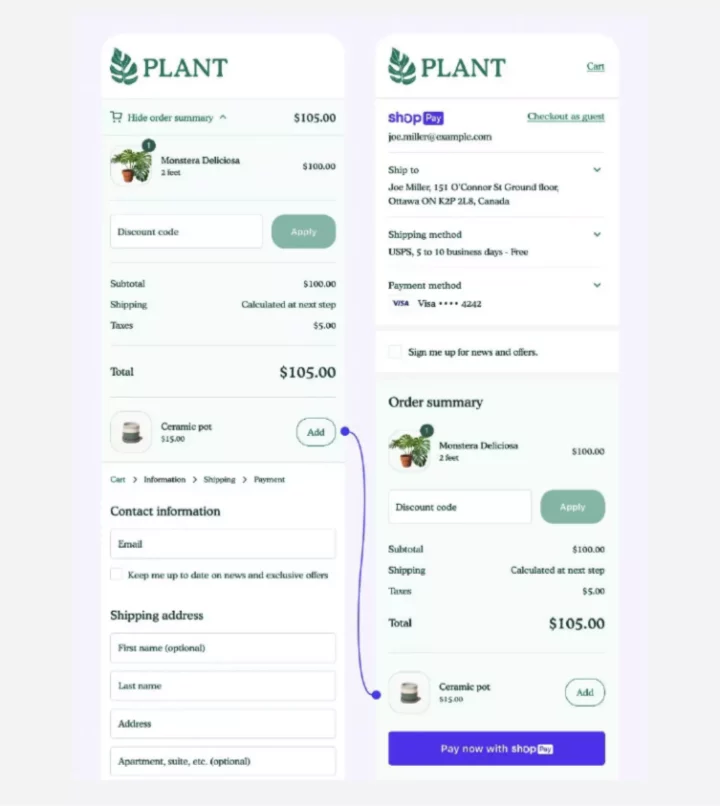
Currently, on Shopify Plus, it is possible to customize some of the checkout blocks.
Tomorrow, with Checkout Extensibility, we’ll have access to many more options that will allow us, for example, to add new features such as product offers, custom fields, or even promotional banners in various locations throughout the checkout process.
By using the Checkout Branding APIs, e-commerce merchants using Shopify Plus will be able to change the logo, fonts, and colors of the checkout page to fully customize the experience to match their brand.
This new feature offers developers, in particular, the opportunity to enhance checkout functionality by offering their extension apps directly on the Shopify App Store. (It’s worth noting that, until now, apps could only expand functionality outside of checkout.)
Here’s an example: a product offered as a cross-sell in the shopping cart, which also appears during the order confirmation step at checkout.
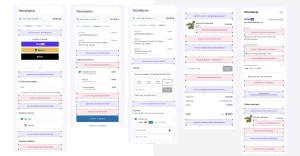
To illustrate this new feature, here is an overview of all the customizable slots in the checkout:
#2 – Post-Purchase Page
Yet another new feature for Shopify Plus merchants—one that’s sure to delight many—the post-purchase page now appears after the order is confirmed but before the thank-you page.
DATASOLUTION would like to share a few ideas for features you can include to optimize your post-purchase page as much as possible:
- Upselling Offers
- Requests for inquiries, comments, or donations
- Offers that include discount codes
- Important notifications to share with your customers
- An incentive to sign up for a loyalty program or your newsletters
#3 – Shopify Customer Cohorts
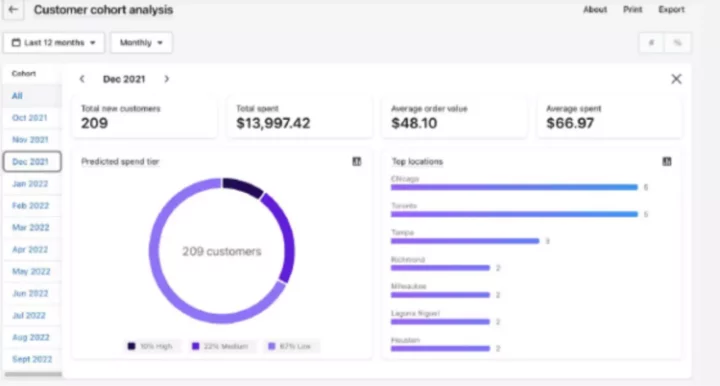
Natively in Shopify, you could automatically generate very comprehensive sales reports that categorize your customers based on various criteria, as listed below:
- Clients Over Time
- First-time sales vs. repeat customers
- Customers by Location
- Loyal customers
- One-time customers
- Projected Expenditures
To supplement this initial data, Google Analytics remained an important tool for more in-depth cohort analysis. Today, this functionality is built directly into Shopify, with several reports available, such as:
- Cohort Analysis Table
- Retention Rate Table
- Details of the cohort analysis
Please note, however, that customer reports are limited to 250,000 unique customers.
To illustrate this new feature, here is a graphical representation of cohorts by location.
#4 – Focal Points
Currently, as with most e-commerce CMS solutions on the market, images are resized starting from the center, which can sometimes crop out important parts of your visuals.
One of the many new Shopify features this month is the introduction of focal points in images.
You can now set a focal point on your image to tell Shopify which part of the image is the most important. This simple step will help the tool better understand your image and preserve it more effectively when resizing.
Please note that this feature applies only to images in the theme, not to images in the product catalog, for example.
This option is built into Shopify’s standard themes, which are listed below.
#5 – Shopify POS

In Canada and the United States, we’re seeing some exciting developments for Shopify POS.
(For those who aren’t familiar, Shopify POS is the point-of-sale system for physical stores, including both the software and hardware.)
The company then unveiled a brand-new payment method, “Tap to Pay” for iPhone, which allows retailers to process payments directly on their mobile devices and enables customers to pay with their NFC-enabled credit or debit cards—or directly with Apple Pay!
This solution clearly illustrates the seamless experience possible in brick-and-mortar retail, within a perfect omnichannel ecosystem, since Shopify POS is directly linked to the e-commerce store, thereby enabling the centralization of the product catalog, inventory, and customer data.
#6 – Shopify Tax for Sales in the U.S.
The new feature, Shopify Tax, improves the accuracy of tax calculations for U.S. merchants who sell their products to customers located in the United States. This is an important consideration given that there are more than 11,000 possible tax configurations for sales in the U.S. alone, depending on the region and specific locality. These e-commerce merchants now have access to the following features:
- Accuracy enhanced by geolocation, which means that taxes are calculated very precisely based on the street, rather than being limited to ZIP codes.
- Product categories improve the accuracy of tax calculations and reduce the need for tax exemptions.
- An estimate of the tax is displayed to customers during the checkout process. Once the checkout process is complete, the final tax amount is calculated and billed to the customer.
- Information on tax obligations is available at any time to help merchants determine where their stores have a taxable business presence.
Most importantly, these taxes are updated continuously, so no manual action is required on the part of Shopify merchants.
#7 – Other Developments
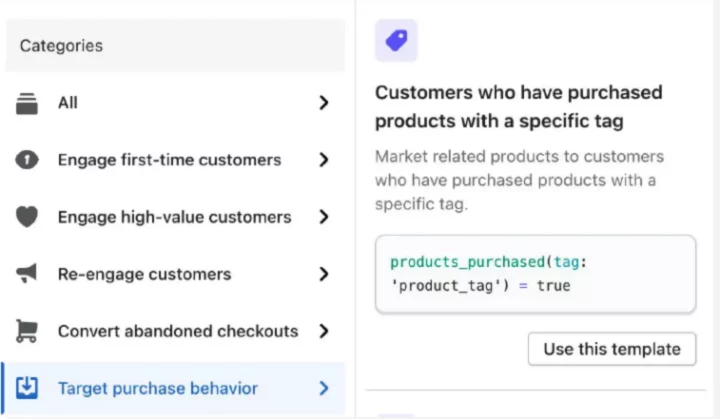
We can now create visitor segments based on purchases of certain tagged products.
This new filter helps create and define customer groups based on their interest in specific types of products.
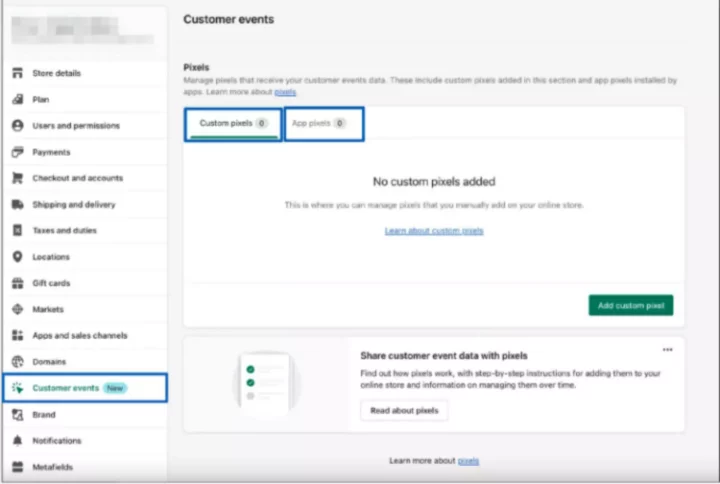
Among the new features expected is the ability to set up tracking or custom conversion pixels, as well as external apps, directly from the Shopify back office. There’s no longer any need to edit the theme or involve a developer.
But also…
Automatic conversion of GIF images to WebP format. This is another feature that’s very complex to implement on on-premise e-commerce solutions, but it’s native and built right into Shopify! This allows e-commerce merchants to upload a GIF animation, which Shopify will convert on the fly to WebP—a format that’s optimized and better suited for performance and SEO.
The implementation of “Add to Cart” and “One-Click Purchase” calls to action via Shop Pay, directly within marketing emails sent to customers.
Automation of CI/CD pipelines for theme update deployments.
And coming soon…
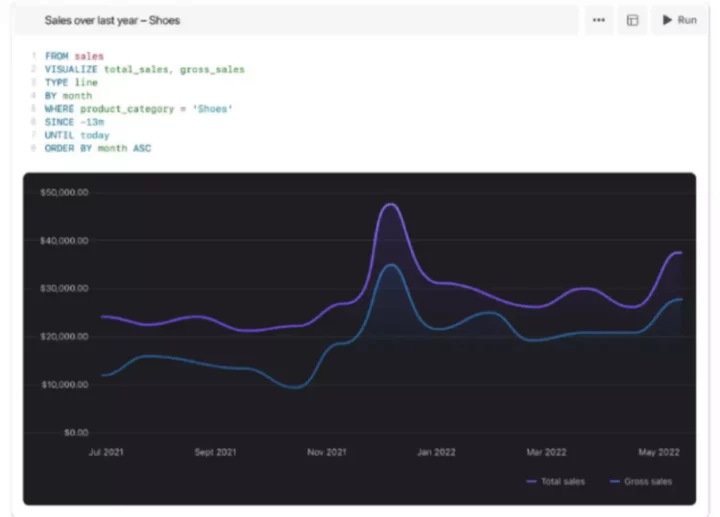
Coming very soon: a new GraphQL interface that will allow you to retrieve and manipulate all sales data. This interface will be called Shopify QL Notebooks and will be available in the coming months. Stay tuned!
What do you think?
As we’ve seen, Shopify continues to roll out new features at a rapid pace, a sign of the company’s strong health as it climbs to the top spot as Canada’s leading digital company, with nearly $2 billion in revenue from licenses and commissions, and nearly $156 billion in revenue generated by the online stores that rely on its platform.
We can’t wait to see what’s coming next, and we’re proud to be part of Shopify’s first circle of partner agencies!
Have a wish? A need? Some ideas? Feel free to contact our team to discuss your project!
Related articles
Visit the blog
ChatGPT Ads on Shopify and HubSpot: What This Means for E-commerce Businesses and Marketing Teams in France
02/10/2026
Fine-tuning LLMs in the Enterprise: Better Than a Frontier Model?
28/09/2026

OroMomentum: AI for B2B efficiency
22/09/2026

AI: The 5 Top Stories of Summer 2026
17/09/2026
Content management on Magento: how to give marketing teams back control with Hyvä CMS
17/08/2026