30 June 2026
Shopify POS in France: A Market That’s Barely Been Tapped and a Real Retail Opportunity
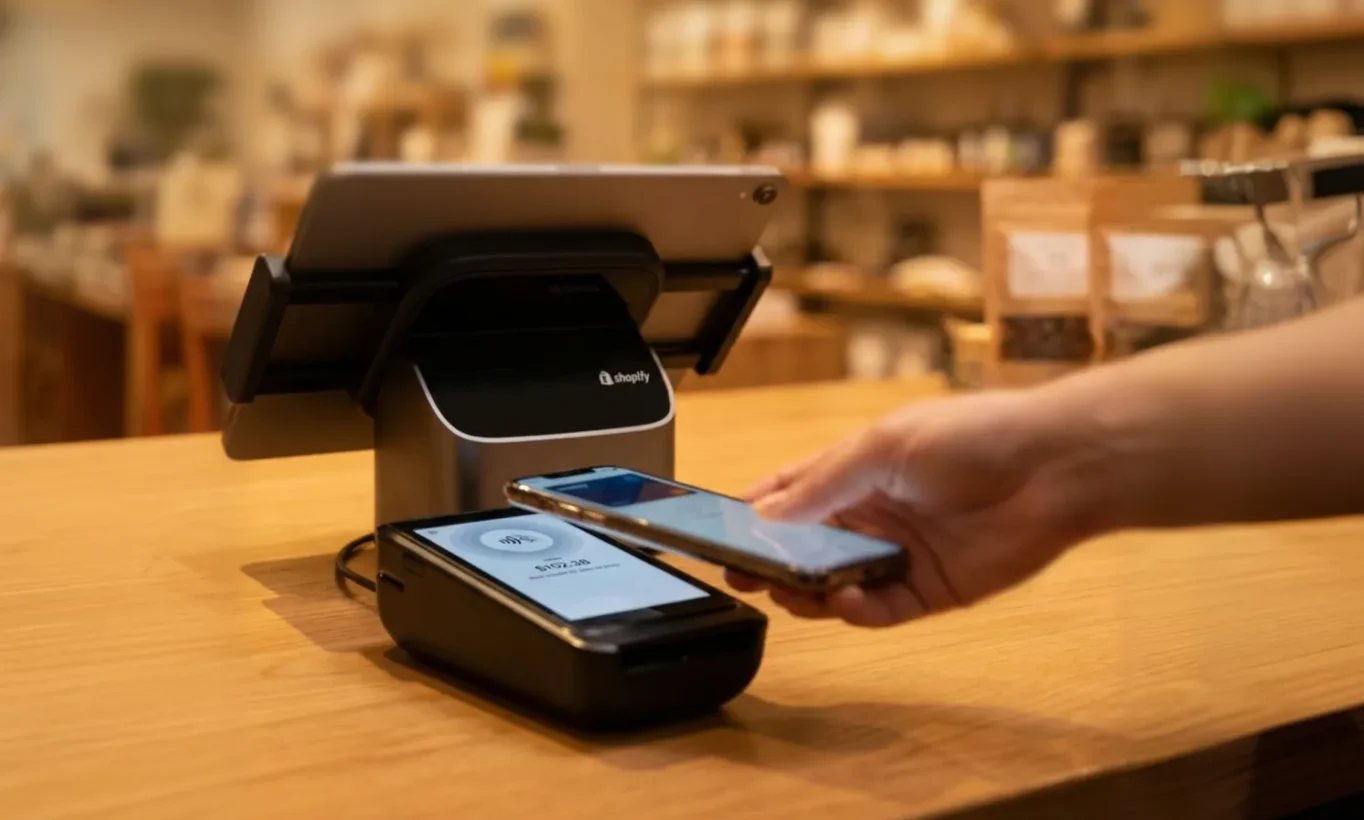
 Brick-and-mortar retail has never gone away. It has evolved. Today, the line between physical stores and e-commerce sites is blurring, and retailers are looking for a point of sale that finally speaks the same language as their online store.
That’s what Shopify POS is all about. And in France, we still have a long way to go in this area.
A vast retail market, but POS penetration remains low
Shopify is already well established in the French retail market. Many brands that sell online also have brick-and-mortar stores or are rapidly expanding their retail operations. The market is there.
However, POS Pro still has very low penetration. It is estimated that about 13% of Shopify’s retail customer base in France uses it. In other words, the vast majority of its potential has not yet been tapped.
Sources: FEVAD 2025, PROCOS.
This is a rare and interesting situation. The challenge isn’t to create the market. It’s to activate the right accounts—those that already exist and have a genuine retail need. DATASOLUTION also supports brands in their Shopify Plus projects, from store design to optimizing the e-commerce experience.
The real issue isn’t the fund; it’s the unified trade system
There’s a common misconception when it comes to POS systems: thinking that they’re just a replacement for a cash register.
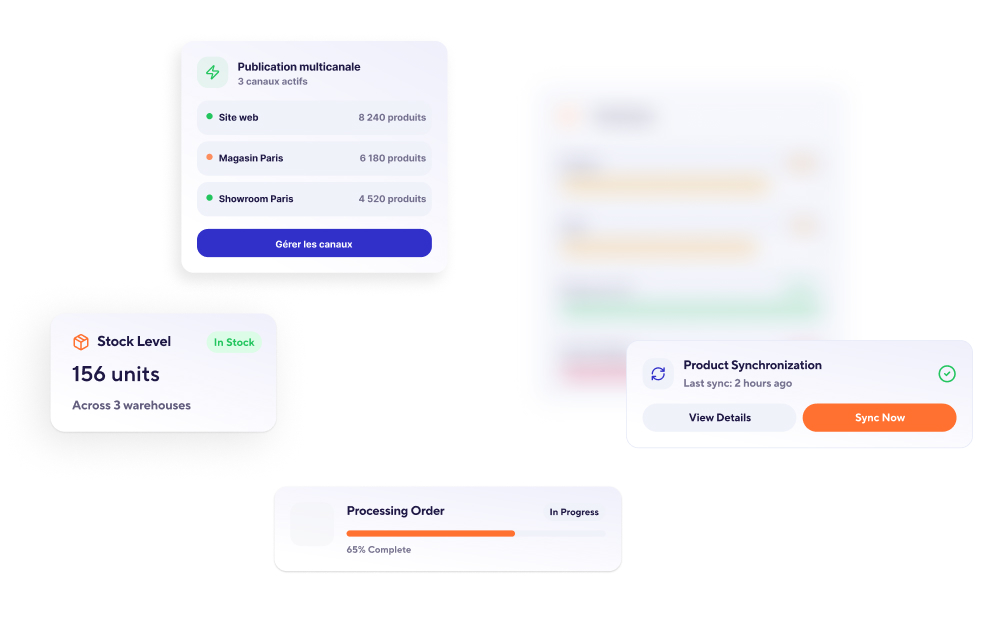
The real issue lies elsewhere. It’s about unified retail. A single inventory, a single customer, a single reporting system—both online and in-store. When a product is sold in-store, the online inventory is updated. When a customer makes a purchase on the website, the in-store salesperson recognizes them. Online and offline operations are no longer siloed.
The benefits can be summarized as a few key promises, which vary depending on the size of the merchant.
For a growing brand with a few stores, the need is simple: to simplify day-to-day operations. A single tool, less friction, and less duplicate data entry.
For a more structured, multi-store brand, the challenge becomes even greater: unifying channels, reducing the total cost of ownership of the tech stack, and being able to scale without having to rebuild everything every time a new store opens
How to identify a good POS project
Not all merchants are ready for a POS project, and not all of them need one at the same time. There are a few indicators that can help you identify the accounts where Shopify POS can quickly add value.
- The first is retail footprint: brick-and-mortar stores that are already open, or an ongoing retail expansion.
- The second challenge is the “omnichannel headache.” The retailer operates both online and in-store, but its inventory, customer data, and reporting are fragmented.
- The third is a risky stack: a legacy, custom, or competing POS system that hinders the roadmap and is expensive to maintain.
- The fourth is the “buying moment.” A replatforming, an expansion, an ERP project, a contract renewal, or cost pressures. These moments open a window of opportunity for decision-making.
- The fifth is the business case. A clear objective: unify channels, reduce TCO, accelerate go-live, or demonstrate ROI.
When several of these indicators are present, the project is likely to succeed and be sustainable over the long term.
When Shopify POS isn’t (always) the right solution
Being honest about the limitations is also what makes a recommendation credible. There are cases where Shopify POS isn’t the right choice—or isn’t the top choice.
This includes businesses that are purely service-based, with no real retail presence—such as a salon, a studio, or a low-volume standalone store with limited inventory and minimal omnichannel capabilities. In these cases, the effort required to set up the business often outweighs the expected return.
Businesses that require a specialized vertical POS system are another case altogether. Restaurants, hotels, and gas stations. Their operational workflows are so specific that Shopify is not intended to serve as their core system.
Finally, highly regulated sectors pose a real challenge: healthcare, pharmacies, and firearms. Compliance, payment requirements, and audit constraints take precedence over retail considerations. The complexity can outweigh the value provided by the POS.
Recognizing these areas means avoiding the sale of a project that will disappoint and focusing your energy where it will have a real impact.
What merchants really want
In the field, merchants’ requests are revealing. The issue quickly goes beyond mere technicalities.
The most common issue isn’t a matter of configuration. It’s a need for guidance. How to train the sales force consistently, especially as the number of stores grows. How do you manage a POS project when you’ve never led one before? How do you choose the right hardware? How do you roll out new features without disrupting what’s already in place?
The message is clear. A POS project is not just a software purchase. It is a transformation project that affects teams, processes, and store operations. And that is precisely where its success lies.
The steps to a successful POS deployment
A well-executed Shopify POS project is organized into several components. Each one matters.
The retail assessment comes first. We evaluate customer flow, staff, store constraints, and business objectives. This step helps prevent unpleasant surprises.
Next comes the build and configuration: Shopify POS, locations, roles, payments, and omnichannel experiences. The technical foundation.
Deployment follows. Hardware, installation, real-world testing, and preparation of the store environment.
Training is too often underestimated. Managers, salespeople, internal liaisons, documentation. Without adoption, even the best configuration is useless.
Finally, system operation and optimization. Post-go-live support, the opening of new stores, and new use cases that emerge over time.
The value of a POS project goes beyond simply configuring the system. It lies in the ability to ensure a smooth launch and sustain usage before, during, and after go-live.
Conclusion: 2026 will be a POS year
The stage is set. A large retail market, still-low POS penetration, and merchants looking for unified commerce and support—not just software.
For brands that have both physical stores and an online presence, the question is no longer whether unified retail is coming.
The question is when to bring it up, and with whom.
If this topic is on your roadmap, now is the right time to discuss it.
Related articles
Visit the blog
ChatGPT Ads on Shopify and HubSpot: What This Means for E-commerce Businesses and Marketing Teams in France
02/10/2026
Fine-tuning LLMs in the Enterprise: Better Than a Frontier Model?
28/09/2026

OroMomentum: AI for B2B efficiency
22/09/2026

AI: The 5 Top Stories of Summer 2026
17/09/2026
Content management on Magento: how to give marketing teams back control with Hyvä CMS
17/08/2026