4 March 2024
Circular Economy: Secondhand
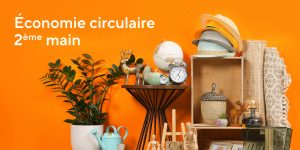 Today, buying secondhand has fully become a civic-minded practice for the French, who are considered early adopters in the European context.
According to the Tripade study, nearly one in two French people (46%) have gotten into the habit of buying secondhand items.
This type of consumption increased sharply during the COVID-19 pandemic, when stores were closed and the French were forced to stay home with time on their hands. They took advantage of this time to declutter by clearing out their wardrobes and closets. They also became more aware of their consumption habits, seeking to be more frugal and responsible.
This trend has accelerated even further with the rise in inflation in 2023. Secondhand goods are therefore good for both the planet and your wallet!
According to a 2023 Gartner study, the secondhand market in France is estimated at 7 billion in revenue across all channels (105 billion worldwide).
This market has long been dominated by cars and textiles. Now, every sector is being impacted by the rise of the secondhand market: toys, furniture, high-tech products, and even luxury goods.
According to Novascope, with 48% of sales in France in 2022 (up 12 percentage points year-over-year), fashion remains the top category of used or refurbished products of interest to the French.
Next come cultural products (45%, up 6 percentage points), furniture and home decor (34%, up 5 percentage points), and games and toys (28%, up 4 percentage points). With only 7% of secondhand sales, major appliances rank last among these categories, just behind computers (8%) and smartphones (12%).
Brands, retailers, and distributors have been somewhat hesitant to enter this secondhand market, which has been dominated for several years by pure-players. C2C sites such as Vinted, Leboncoin, and Back Market have taken full advantage of this.
It’s not always easy for a brand or retailer to shift a business model —which has been based on the sale of new products since time immemorial—toward the sale of used products and related services.
As part of an effort to strengthen customer relationships (consumers’ need for reassurance regarding secondhand products purchased online on C2C sites), combined with a sustainability strategy to ensure long-term viability, an increasing number of retailers are turning their attention to the highly dynamic secondhand market (up 22% compared to 2020), drawing on all or part of the 4Rs of the circular economy.
- Resale
- Repair
- Rental
- Remake
The implementation of ae seconde should be carried out using a Test & Learn because it inevitably inevitably the company at various levels.
Definition of the Product/Service Offering
At Okaïdi, the selection of used products complements the selection of new products to avoid cannibalization. At King Jouet, the goal is to select used products with higher added value. They account for 30% of the shelf space in stores where they are available.
At FNAC DARTY, our selection of used products comes from returns, repaired defective items, and products purchased from refurbishers.
Customer journey with an overview of the product offerings in-store and online
FNAC had initially considered launching a website dedicated to giving objects a second life. They decided to integrate it into the standard FNAC website experience to show customers that this type of product is held to the same standards as new products in terms of handling, after-sales service, warranty, and advice.
At Okaïdi, the promotion is currently available in about 100 stores across the chain. The goal has been to capitalize on foot traffic in the stores.
At King Jouet, the “King OKaz”program is currently available in 10 pilot stores and is directly integrated into each department. The same applies to the website, specifically in the catalog and product listings. Secondhand products should not be viewed as substitutes but rather as potential complements to the selection of new products.
Communication and Customer Relations
A strategy for communication must be carefully planned in advance in terms of messaging to avoid confusing customers. Launching a “Secondhand” offering tends to strengthen the bond between the customer and the brand, resulting in a higher increased .
The DartyMax subscription, which offers unlimited maintenance and repairs for household appliances, has 1.1 million subscribing households in France, with a goal of reaching 2 million by the end of 2024.
Communication and Training for Sales Teams
Lead change management efforts among the sales teams based on the CSR strategy developed by the company. The goal is to be able to explain the approach and benefits of this secondhand offering, and how it can be beneficial for the customer, the company, and the environment.
Logistics
Dedicated processes must be put in place for the trade-in of used products (in-store, online, and throughout the supply chain) to welcome the customer, select and approve the trade-in, ensure the product’s compliance (mandatory EEC standard certification for toys), its traceability for luxury goods, its repair (if necessary) and reconditioning prior to resale, its storage, and the issuance of a new warranty. The growth of the secondhand market requires the standardization of these processes and their deployment on a larger scale.
For example, with the launch of its DartyMax service—which offers product repairs—and its subsequent success, FNACDARTY faced difficulties in hiring repair technicians. They even decided to create a school for this purpose.
Trade Policy
Clearly define the return policy in advance—whether it involves gift cards, loyalty points, or an immediate cash refund to the customer. This policy will inevitably have an impact on the business’s profitability.
The First Economic Results Shared by Retail Industry Players
FNAC:
- 120 million euros in revenue generated in 2023, with 30% growth.
- Projected at 10 to 30 percent, depending on the market.
King Jouet:
- 8% of sales volume at stores offering the King Okaz promotion, with a target of 15% and sale prices at 50% off (in the toy category, secondhand items will account for 20% of the market).
Okaïdi:
- Stores that sell secondhand goods perform slightly better economically and see an increase in customer loyalty.
- Foot traffic in these stores is also higher because of the customer journey—customers must bring in their used items and come back to pick up their unsold items. These are all opportunities for customers to interact with the brand, the products, and the sales associates.
Are you considering launching a new secondhand service for your customers and wondering which technology solutions to use?
Our teams can assist you with project planning, implementation, and maintenance!
Related articles
Visit the blog
ChatGPT Ads on Shopify and HubSpot: What This Means for E-commerce Businesses and Marketing Teams in France
02/10/2026
Fine-tuning LLMs in the Enterprise: Better Than a Frontier Model?
28/09/2026

OroMomentum: AI for B2B efficiency
22/09/2026

AI: The 5 Top Stories of Summer 2026
17/09/2026
Content management on Magento: how to give marketing teams back control with Hyvä CMS
17/08/2026