

The world's leading dairy group
Lactalis is the world’s leading dairy group, with four major brands—Président, Galbani, Lactel, and Parmalat—while also supporting and investing in local brands.
Active across all dairy categories, the company’s 85,500 employees transform milk into a wide variety of products: cheeses, drinking milk, yogurt, butter and cream, dairy ingredients, and nutrition products.
The Group operates nearly 270 production sites across 49 countries, where 23.1 billion liters of milk are collected.
Having more reliable data
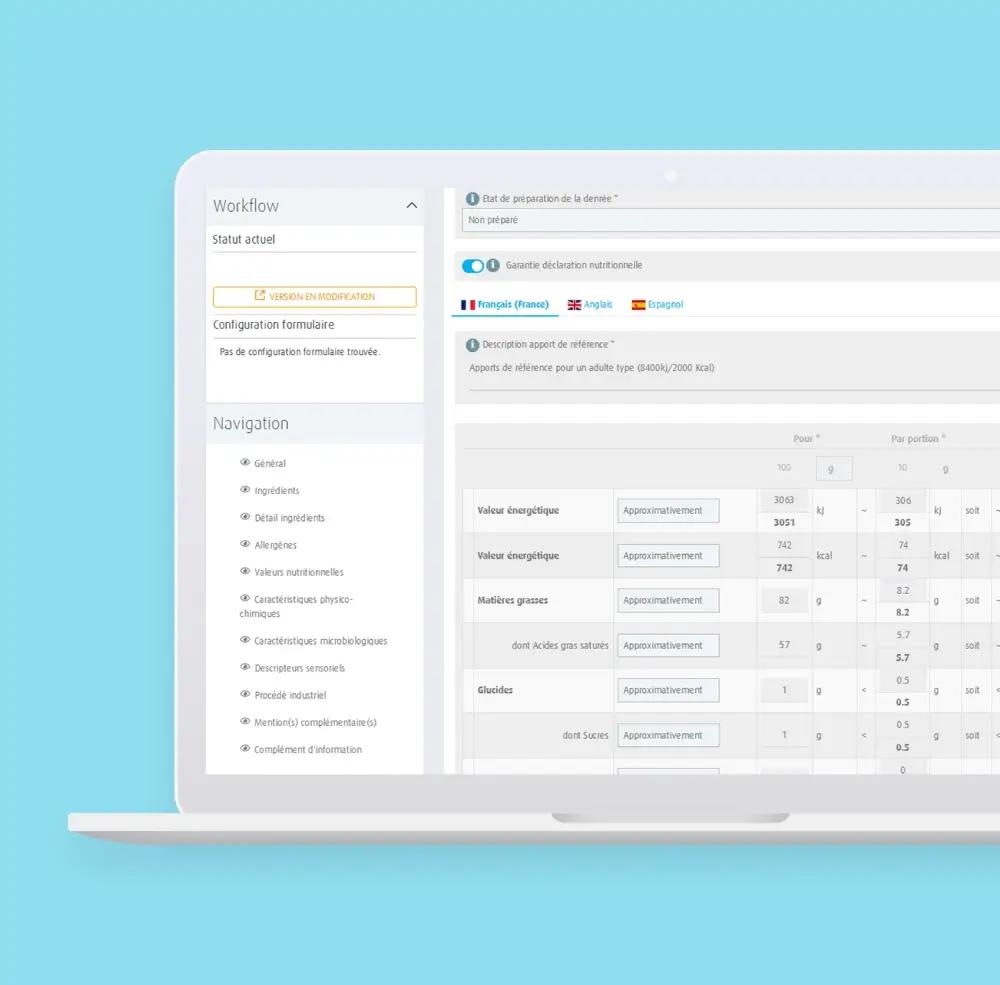
Lactalis wanted to create a comprehensive database for all of the group’s products, containing reliable information from the factory to the customer. The information will be published to internal (ERP, WMS) and external (GDSN, LSP) information systems.
The main challenge for Lactalis was to eliminate barriers to business growth by creating and maintaining a group-wide product catalog—a new information management system.
In addition, stakeholders will be responsible for data entry and confidentiality. Eliminating duplicate or triplicate entries and improving information sharing were also among the project’s objectives. The PIM had to be flexible enough to adapt to changing regulations in the food industry.
One platform to manage it all
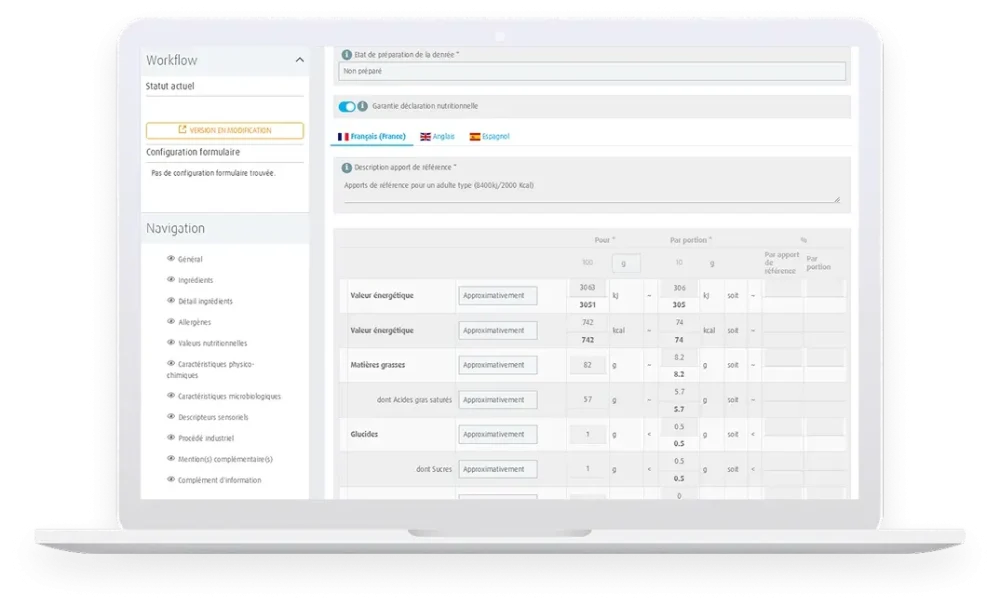
Thanks to Pimcore’s cross-domain capabilities, it was possible to define and manage all objects related to a product: recipes, factories, packaging, and even advertising licenses!
The customizable platform enabled DATASOLUTION to create specific features (form generator, business rules, etc.). The integrated workflow engine was used to design and implement the complex data validation process throughout the product creation workflow.
The DATASOLUTION team also developed dedicated screens and processes to facilitate data entry and verification (such as the ingredients table). An SSO connector with Lactalis’s Active Directory was implemented to streamline the onboarding of new users.
The results observed
In conclusion
Thanks to centralized and reliable information, Lactalis has seen a clear improvement in the quality of information across the four entities where the PIM was deployed. Data entry has been streamlined across the group, particularly in the factories (with up to a 60% reduction in the number of palletizing schemes in certain areas).
Product teams now have greater visibility into the creation process, particularly any bottlenecks. The PIM is now connected to numerous internal systems, including SAP. Sales and technical data sheets are available “on the fly” via the PIM. Workflows are now standardized across divisions.
Lactalis can now generate its first key performance indicators related to product development. A user group has been formed to define all PIM enhancements and to review and improve all processes.
Latest articles
Visit the blog
ChatGPT Ads on Shopify and HubSpot: What This Means for E-commerce Businesses and Marketing Teams in France
02/10/2026
Fine-tuning LLMs in the Enterprise: Better Than a Frontier Model?
28/09/2026

OroMomentum: AI for B2B efficiency
22/09/2026

AI: The 5 Top Stories of Summer 2026
17/09/2026

Content management on Magento: how to give marketing teams back control with Hyvä CMS
17/08/2026