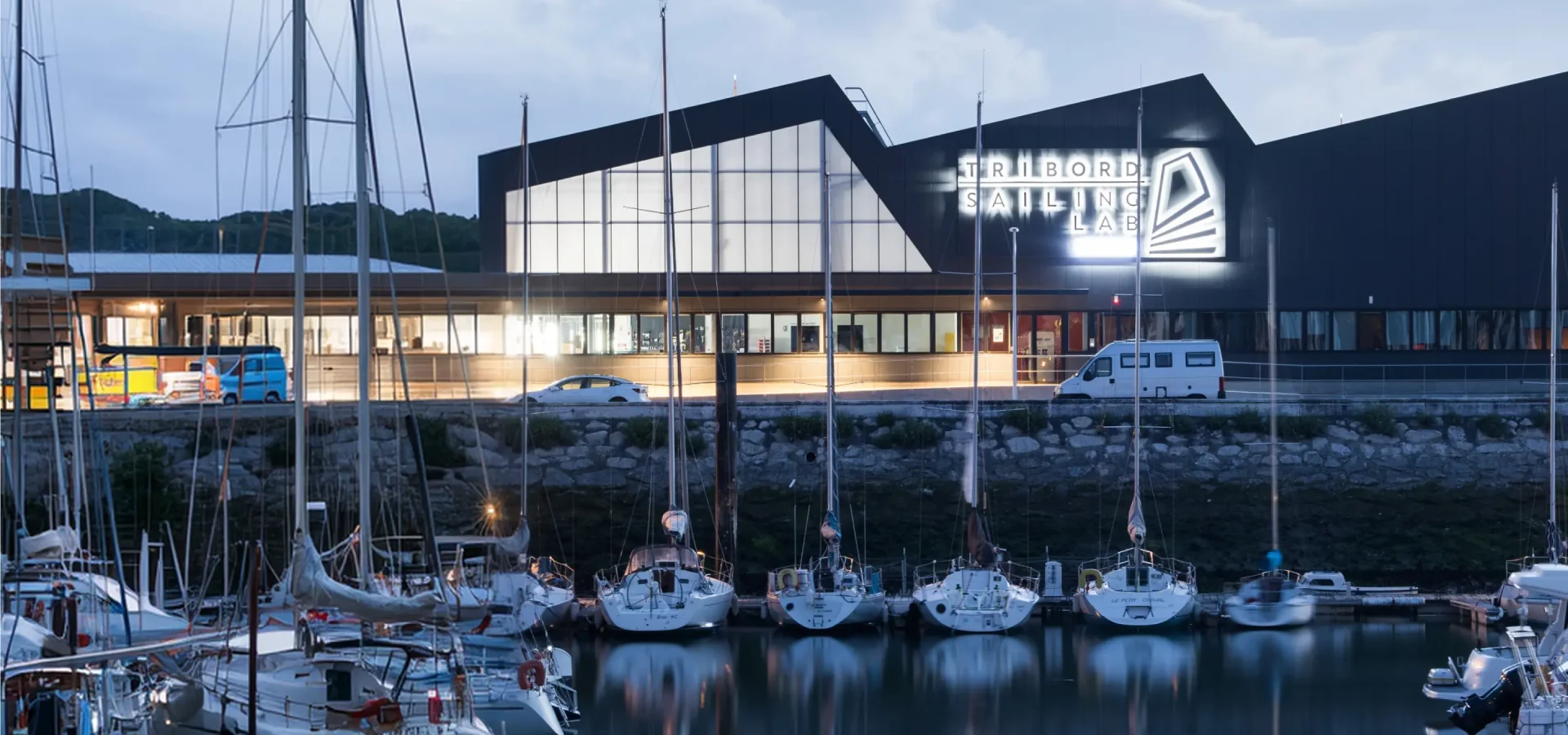

Pushing Innovation Beyond the Limits of the Imagination
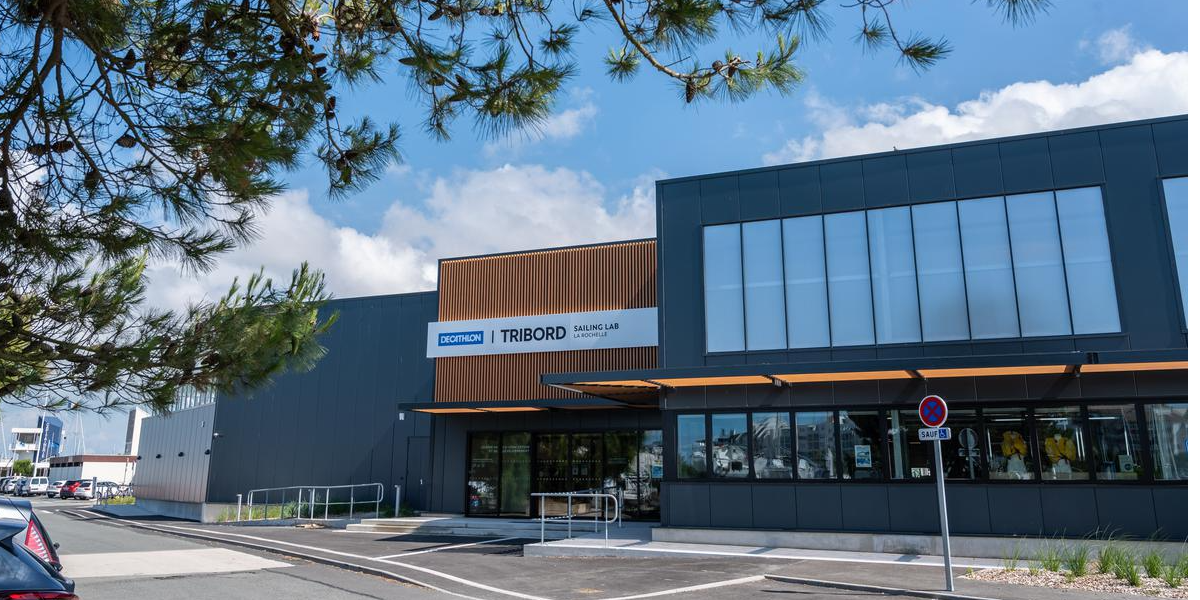
Originally based in Hendaye, the Tribord Sailing Lab is moving to La Rochelle, in the heart of France’s largest marina. The headquarters of Tribord—the Decathlon Group’s sailing brand—is intended to be a new hub for community, collaboration, and co-creation.
This building is a unique project—a giant fab lab, a multidisciplinary hub where brand executives, customers and prospects, partners, employees, and visitors come together.It was designed with this purpose in mind: to welcome the public, promote the brand, and demonstrate how it is evolving and how products are tested, shaped, and manufactured.
Digitization
Connect an Entire Building
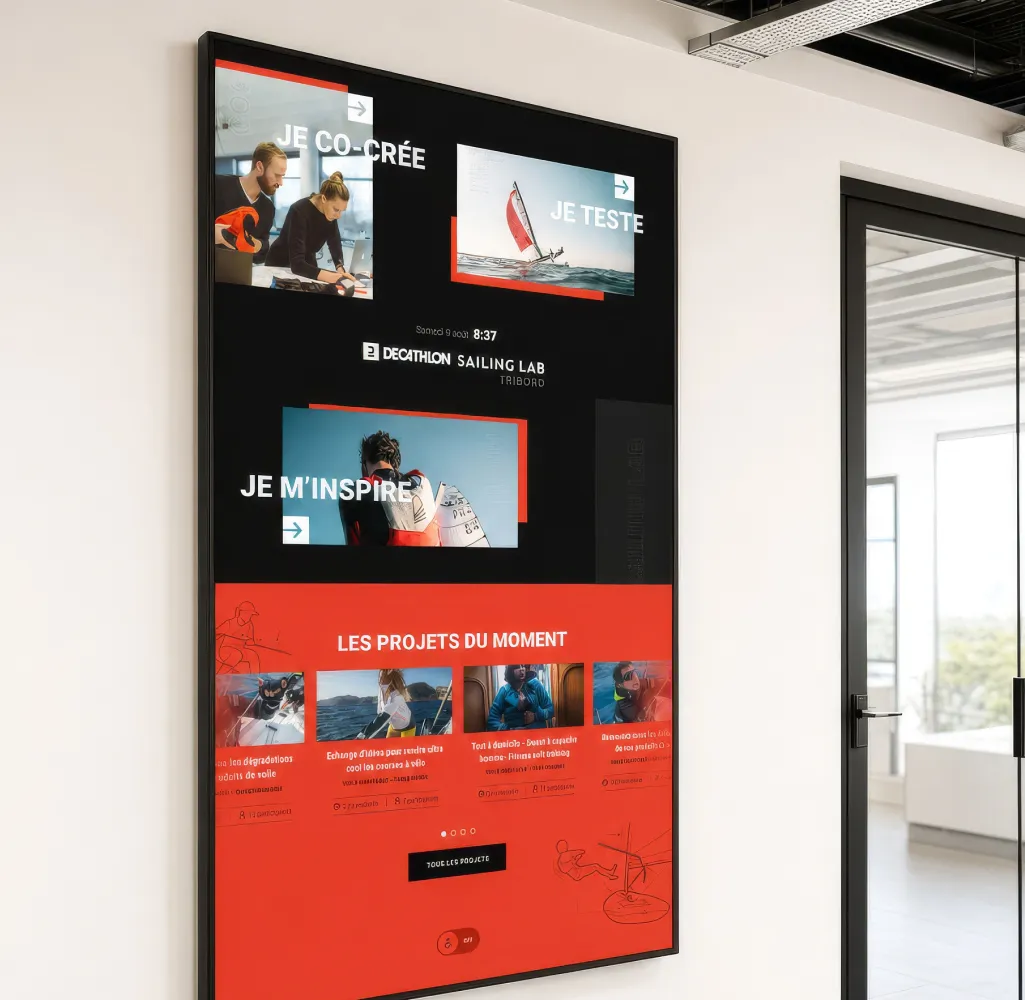
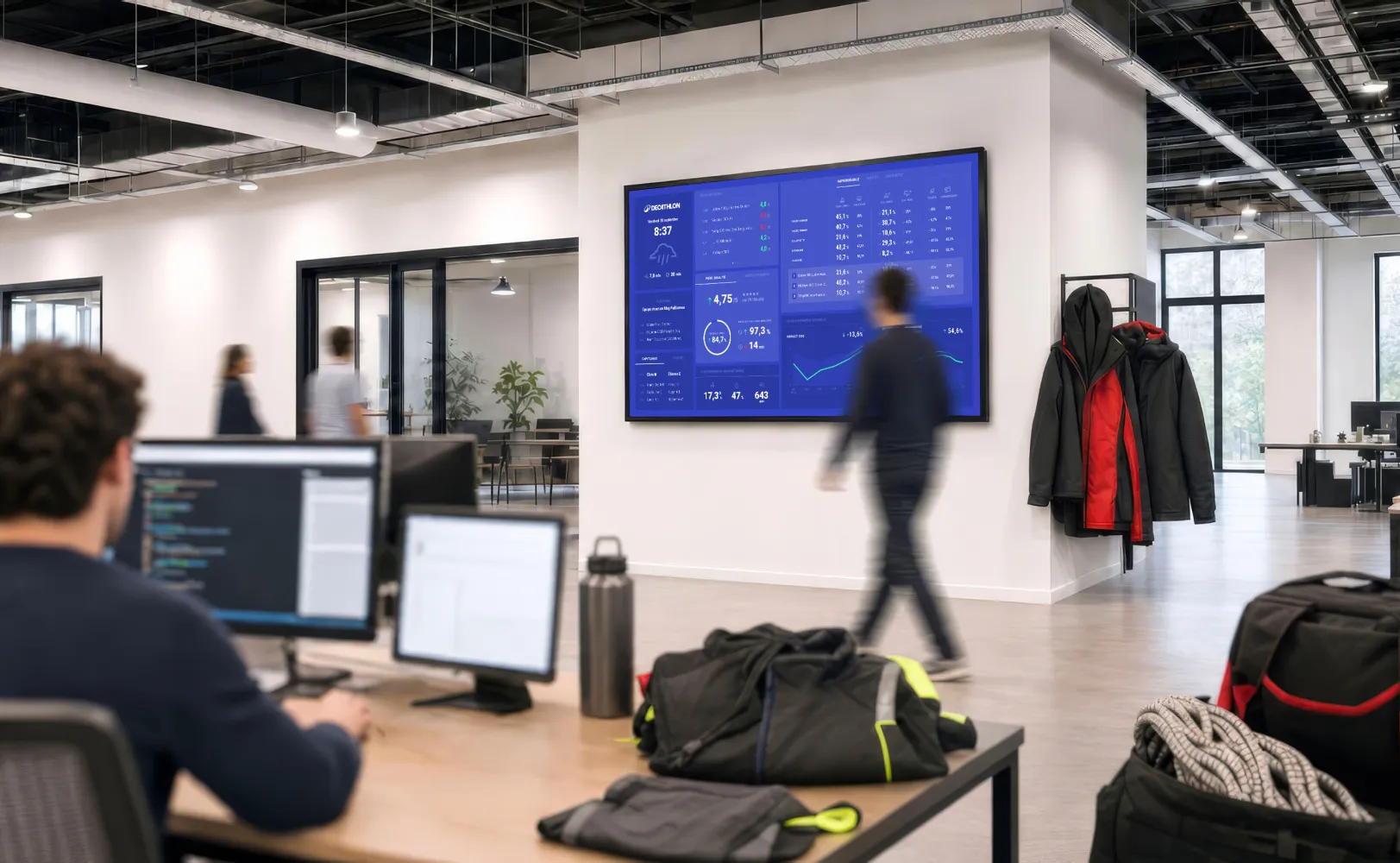
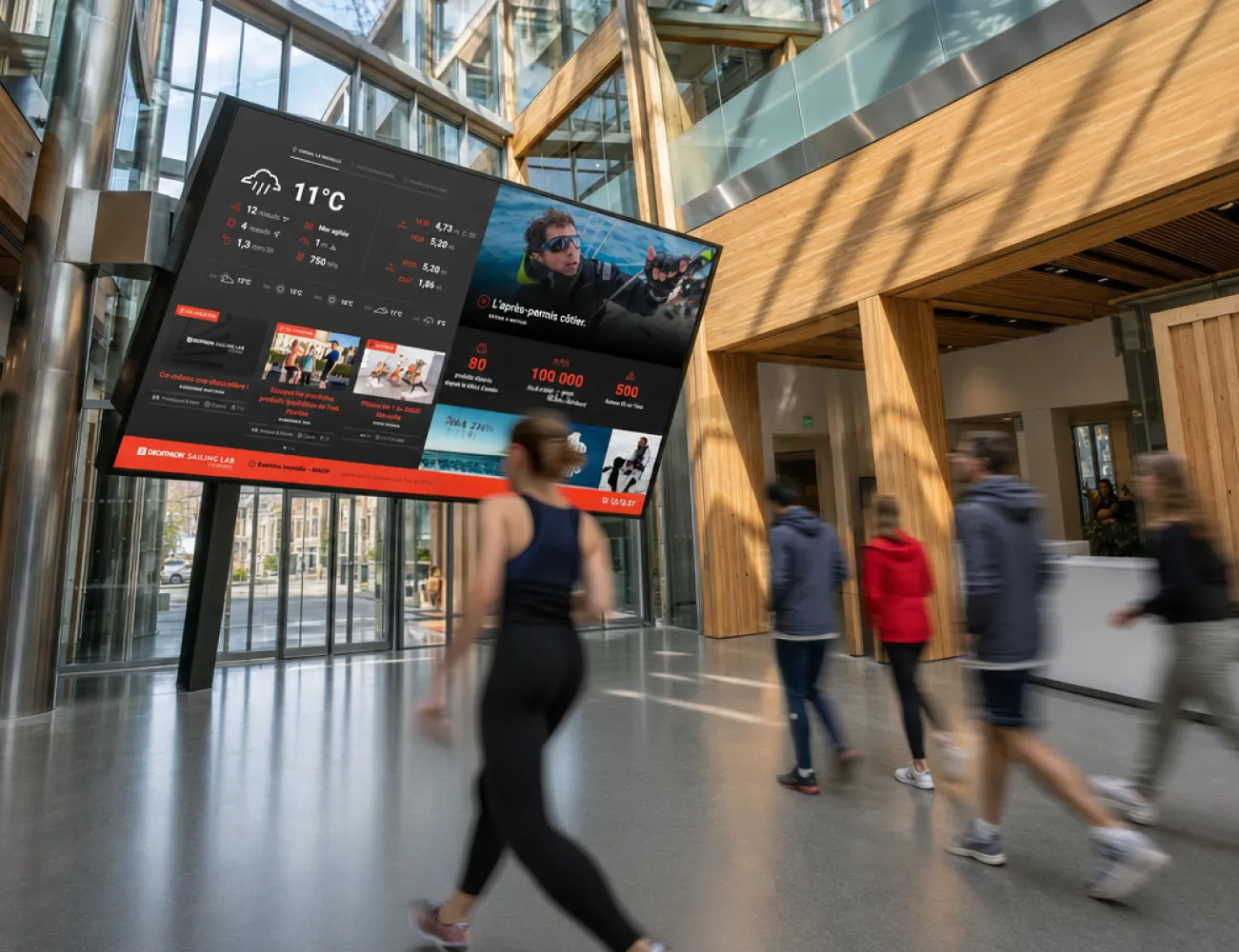
- Connected Screens
- Smart Meters
- Data Recovery

Co-design
A host of innovations all in one place
For this building digitization project, Tribord did not describe the technical requirements to us but rather the intended uses of each technology they wanted to implement: connected screens, smart reception kiosks, co-design processes… Specifically, to cite just one example among many, we helped shape the concept for the “Rain Room,” a large room located in the heart of the Sailing Lab that simulates a storm under real-world conditions, allowing the durability and quality of jackets and sails to be tested before they are brought to market.
To ensure optimal and safe use, one of our tasks was to detect moisture to prevent leaks… And we were assigned similar tasks for the entire building. We had to make nearly 3,000 m² connected, interactive, smart, and digitized!
Data Flow
Interactions with Data
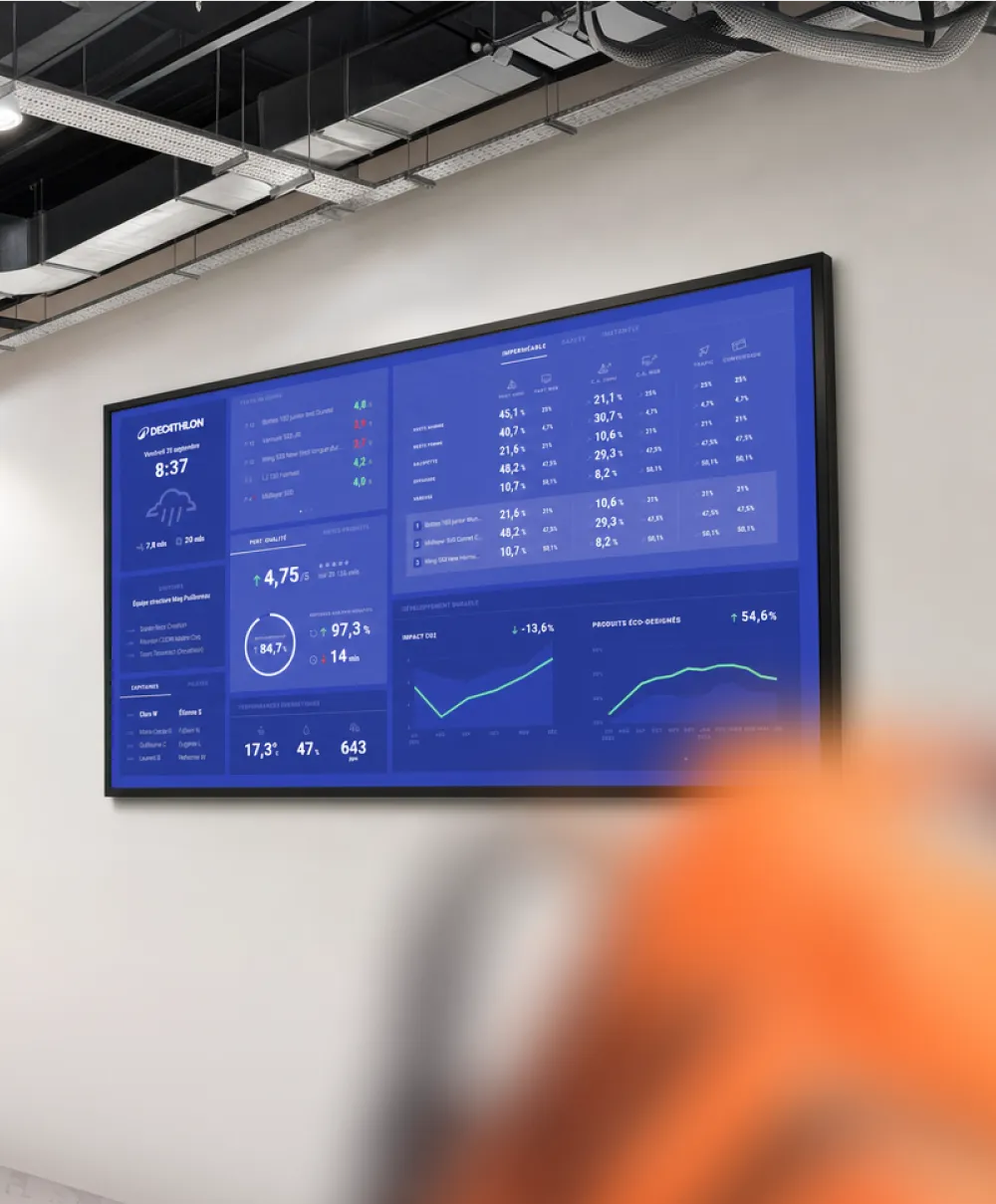
In total, we had to connect more than twenty data streams—via API keys—to each other in order to gather information relevant not only to Tribord employees but also to passing customers. In addition to Decathlon’s internal data feeds, such as product data, we worked on integrating with the information systems of all relevant external parties, including local weather, the surrounding transportation system, port-related data, tides, and more.
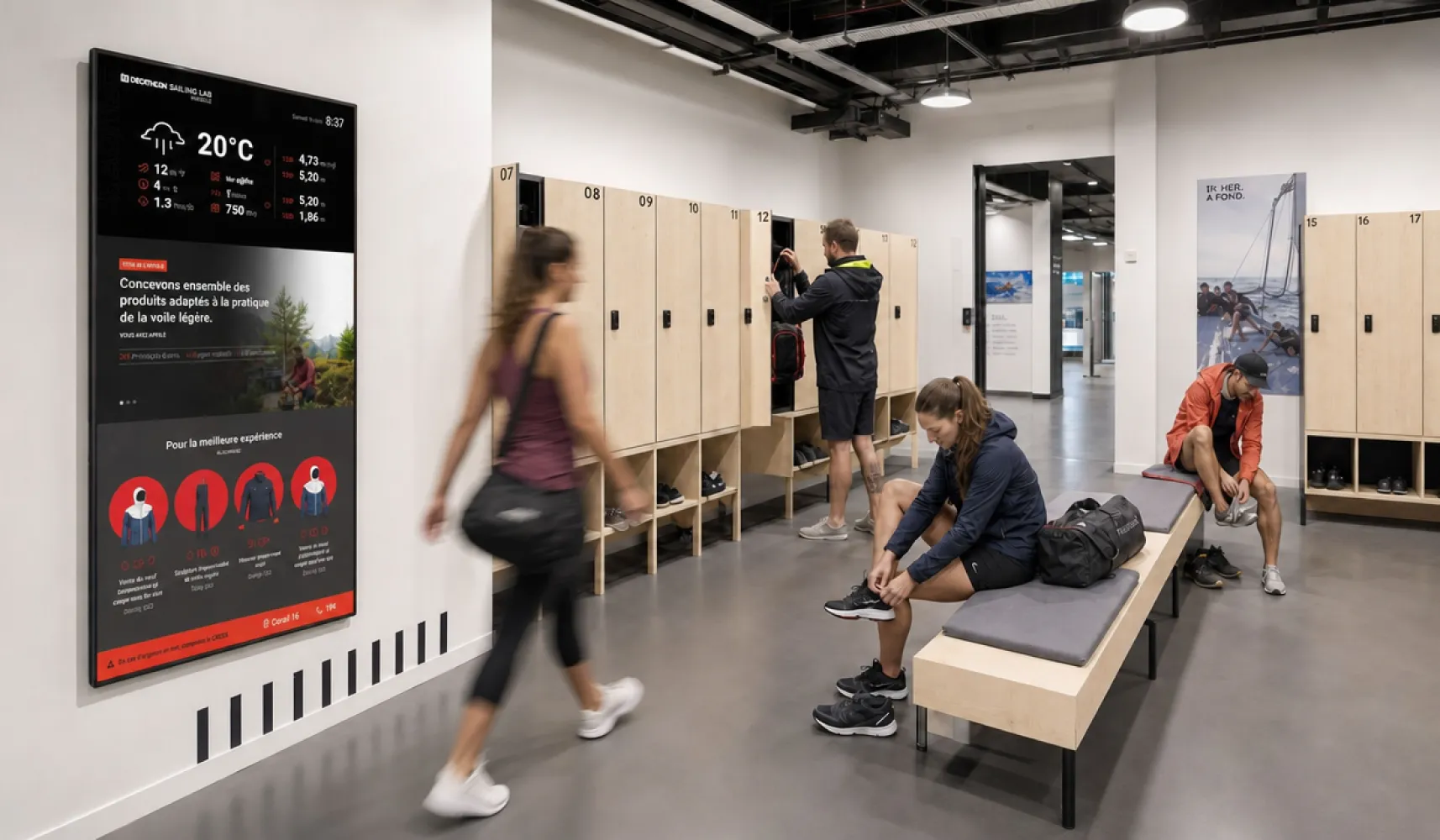
These data streams are consolidated, updated, and synchronized, and they interact with various devices or connected objects capable of retrieving the information and displaying it in real time within the building:
- Sensors: They are used to monitor environmental conditions, such as humidity, or to control the opening and closing of doors.
- Passive displays: They show real-time data on building usage (such as electricity consumption).
- Active terminals: These are touchscreens that allow users to interact with data and write to the data streams in real time.
Latest articles
Visit the blog
ChatGPT Ads on Shopify and HubSpot: What This Means for E-commerce Businesses and Marketing Teams in France
02/10/2026
Fine-tuning LLMs in the Enterprise: Better Than a Frontier Model?
28/09/2026

OroMomentum: AI for B2B efficiency
22/09/2026

AI: The 5 Top Stories of Summer 2026
17/09/2026
Content management on Magento: how to give marketing teams back control with Hyvä CMS
17/08/2026